
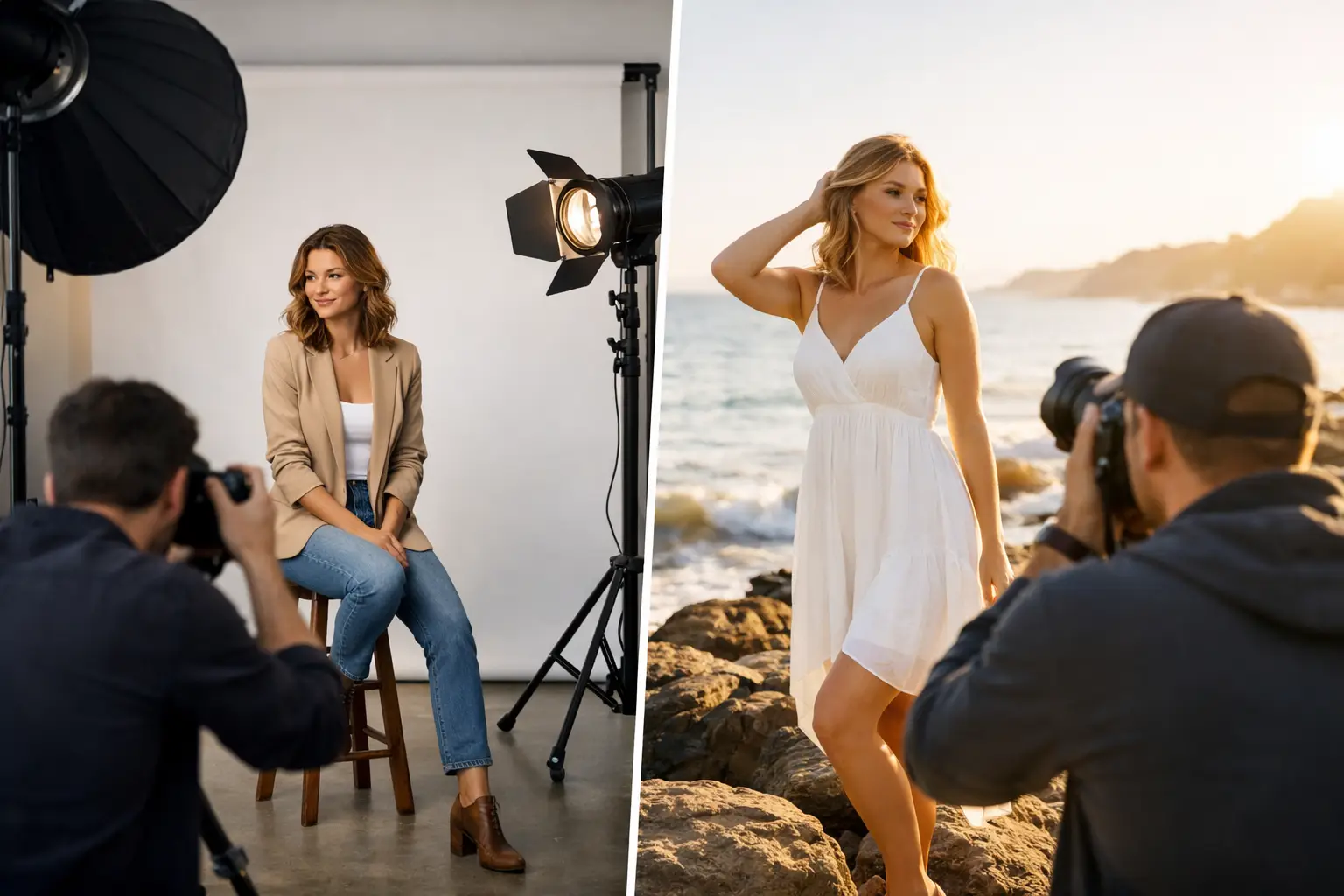
A polished executive portrait on a clean backdrop sends one message. A portrait made on your shop floor, in your restaurant, or inside your office sends another. That is why studio versus location photography is not just a production choice. It is a brand decision that shapes how customers, partners, and prospects understand your business.
For commercial clients, the question is rarely which option is better in the abstract. The real question is which setting tells the right story, supports the campaign, and gives your team the most useful image library. Sometimes that means full control in a studio. Sometimes it means bringing the camera into the environment where your brand actually lives.
How studio versus location photography changes the story
Every image carries context, even when the background is simple. In a studio, context is reduced on purpose. Attention stays on the person, product, texture, or form. That can be a major advantage when your goal is consistency, precision, and flexibility across marketing materials.
Location photography works differently. The environment becomes part of the message. Architecture, machinery, natural light, interiors, signage, and team interaction all help define the brand. For businesses that want to communicate culture, process, scale, or authenticity, that context can do a lot of heavy lifting.
This is why the choice should start with strategy rather than preference. If the goal is clean, repeatable product imagery for ecommerce, studio is often the smarter fit. If the goal is to show your people at work and make the business feel accessible and real, location usually brings more value.
When a studio is the right call
Studio photography gives you control that is difficult to match anywhere else. Light can be shaped precisely. Backgrounds can stay consistent across multiple subjects. Weather, changing daylight, and site limitations do not interfere with the schedule. For a marketing team that needs efficiency and predictability, that control matters.
This is especially useful for headshots, product photography, food and beverage work with a highly styled look, and campaign assets that need to align closely across print, digital, and editorial placements. When images need to feel elevated, minimal, and intentional, the studio creates a reliable foundation.
There is also a practical advantage in post-production. Studio images tend to be easier to standardize because exposure, shadows, and color are more consistent from frame to frame. If your business needs a library of assets that can be used over time without visual drift, studio production often supports that better.
That said, studio work can feel detached if the concept is too generic. A technically strong portrait can still miss the brand if it says nothing about the people behind the company. The same is true for products. A clean white background works beautifully in some contexts, but it does not always show scale, use, or emotional appeal.
When location photography creates more impact
Location photography brings texture, atmosphere, and credibility into the frame. For many brands, that is where the strongest storytelling happens. A construction company in the field, a hospitality team in service, a manufacturer inside its facility, or a professional services firm photographed in its actual environment can all communicate trust faster than staged imagery alone.
There is a reason clients often respond strongly to images that feel grounded in a real place. They reveal how the business operates. They show people in context. They make the brand more believable because the setting supports the message instead of simply decorating it.
For industrial, corporate, restaurant, lifestyle, and editorial assignments, location often provides details that cannot be replicated in a studio. The scale of a workspace, the mood of natural light through an office, the energy of a kitchen during service, or the visual rhythm of a warehouse all add depth to the final image set.
The trade-off is that location work introduces variables. Lighting changes. Backgrounds can be busy. Operational schedules may limit access. Safety, weather, and logistics can influence what is realistic on the day of the shoot. Strong planning solves much of that, but location photography almost always asks for more adaptability from both the photographer and the client team.
The business case for each approach
Marketing decisions are usually measured by more than visual preference. Teams need images that work across websites, ad campaigns, social content, recruitment materials, annual reports, media kits, and sales collateral. That is where the studio versus location photography decision becomes more commercial.
Studio photography is often the better investment when your brand needs assets that can be used in many layouts and formats. Clean backgrounds make design easier. Consistent framing supports multi-page campaigns. Product and portrait images can be repurposed without fighting the environment around them.
Location photography is often the better investment when your business needs differentiation. If competitors are relying on stock imagery or generic headshots, real photographs from your own spaces can immediately strengthen credibility. They also help your audience understand what working with you looks like, which is valuable for service businesses, industrial firms, hospitality brands, and companies focused on culture and recruitment.
In many cases, the strongest answer is not either-or. It is a planned combination. A studio session can create refined hero images, while a location session builds the broader brand narrative. That balance gives marketing teams both precision and personality.
Choosing based on subject, audience, and usage
The best setting depends on what you are photographing, who needs to respond to it, and where the images will appear.
If you are photographing executives for press releases, speaking engagements, and investor-facing materials, a studio setup often delivers the most polished and flexible result. If you are introducing leadership in a way that feels more human and connected to company culture, photographing them on location may serve the message better.
If you are photographing products, studio work is ideal when accuracy, detail, and consistency are the priority. If the product needs lifestyle context or scale, location or a styled environmental setup may communicate more effectively.
If you are photographing a restaurant, hotel, or retail brand, location usually carries more emotional power because the space is part of the customer experience. If you are photographing food items for menus, ads, or packaging, a studio or controlled set may give you stronger styling and lighting precision.
For industrial and manufacturing clients, location photography is often essential because the environment proves capability. Equipment, workflow, safety, and operational scale are difficult to communicate without showing the actual site. But even there, studio-style control can still play a role for product details, leadership portraits, or campaign-specific assets.
What clients often underestimate
One common misconception is that studio photography is always simpler and location photography is always more expensive. Sometimes that is true, but not always. A location with strong natural light, easy access, and a clear shot list can run very efficiently. A complex studio production with multiple setups, stylists, and products can be equally involved.
Another misconception is that authenticity only happens on location. In reality, authenticity comes from intentional creative direction. A studio portrait can feel honest, confident, and brand-specific when the concept, styling, and expression are aligned. A location photo can still feel generic if the environment is not used thoughtfully.
The strongest commercial photography starts before the camera comes out. It begins with understanding what the brand needs to communicate and what the audience needs to feel. That is where collaboration matters most.
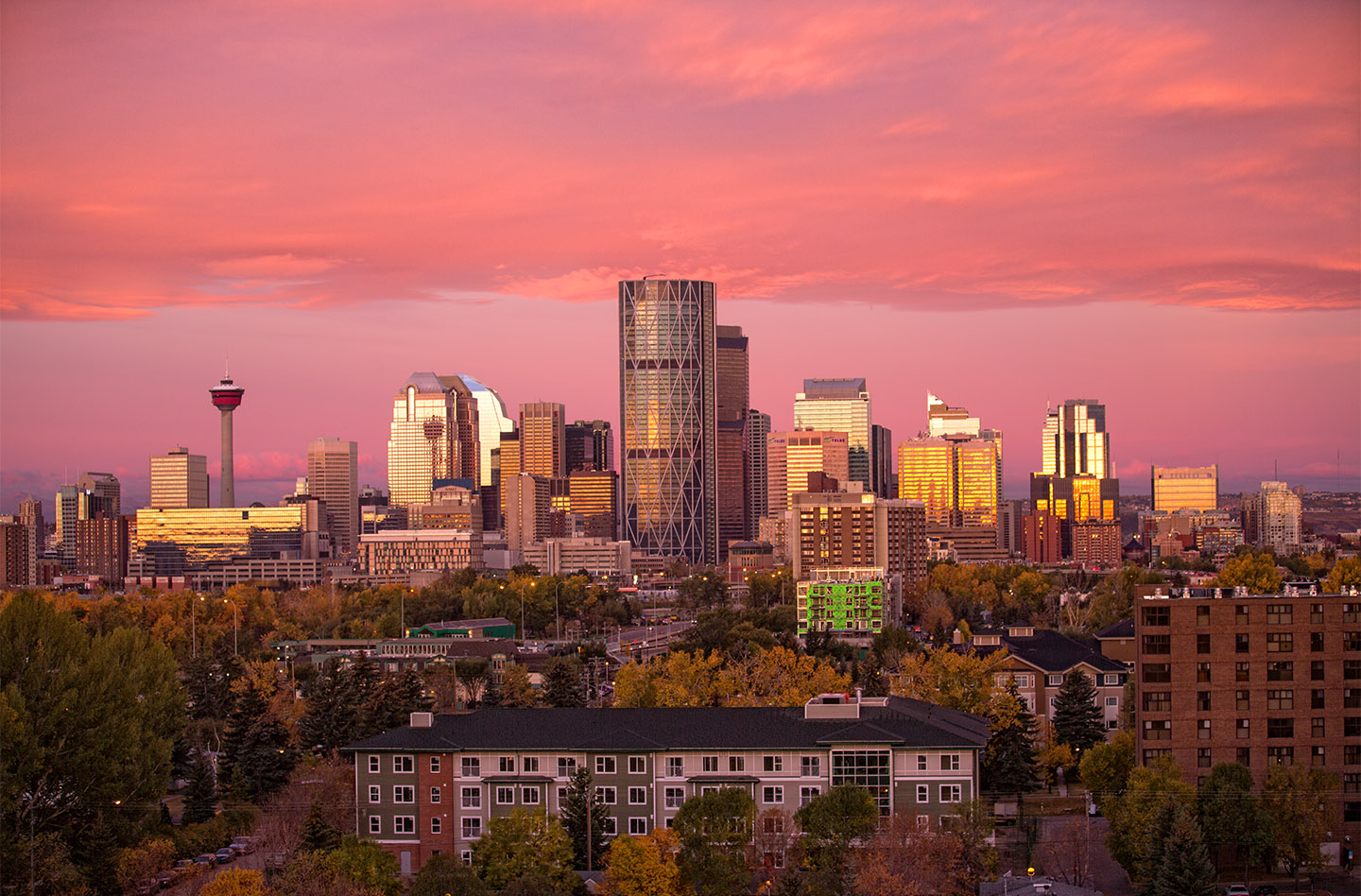
At Image Calgary, that planning stage is often what determines whether a shoot should happen in a studio, on site, or across both environments. The goal is not to force a format. The goal is to create images that serve the brand, the campaign, and the business case behind the work.
Making the right call for your next shoot
If your brand needs control, clean design flexibility, and a polished visual system, studio photography is often the right foundation. If your brand needs atmosphere, credibility, and a stronger sense of place, location photography is usually the better storyteller. And if your marketing needs are broader than a single campaign, a mixed approach can give you a far more useful image library.
Good commercial photography is not about choosing the more dramatic option. It is about choosing the environment that helps your audience understand who you are, what you do, and why it matters. The right setting makes that message easier to see.