
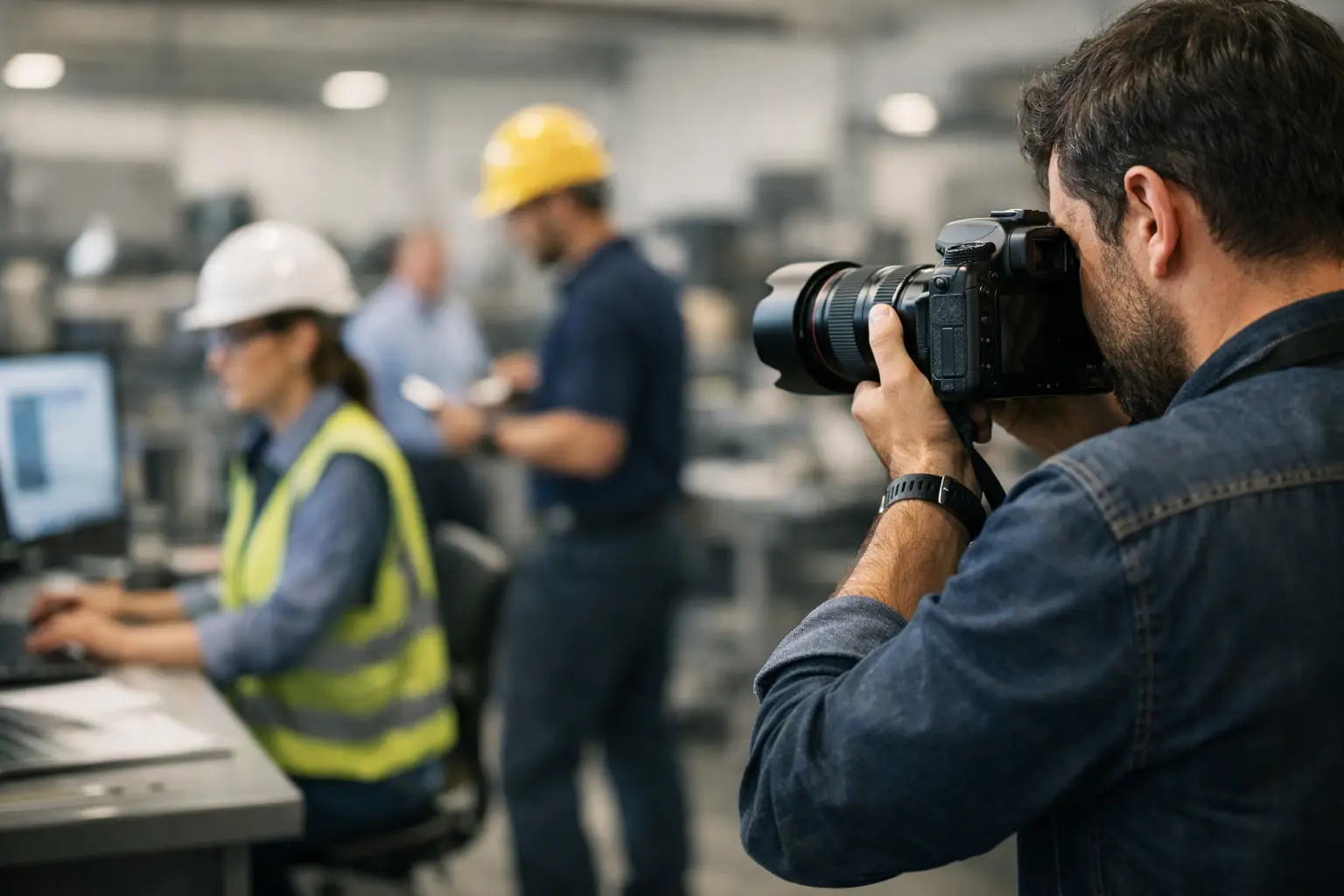
A busy workplace is where a company’s story becomes visible: crews solving problems, customers being served, products moving, and teams making decisions in real time. Learning how to photograph busy workplaces is less about asking people to pause and smile than building a plan that captures this energy without interrupting the work that matters.
For a marketing team, the challenge is twofold. The photography needs to feel authentic enough to earn trust, yet polished enough to support a website, campaign, recruiting effort, annual report, or media placement. The strongest workplace imagery does both. It shows real people doing meaningful work while giving every frame a clear brand purpose.
Start With the Business Story, Not the Shot List
A shot list is useful, but it should follow the larger conversation. Before the camera comes out, define what the organization needs the viewer to understand. Is the goal to demonstrate technical expertise? Show a welcoming customer experience? Build confidence in a safety-first industrial operation? Attract skilled employees? Each goal changes what deserves visual emphasis.
A manufacturing facility may need images that communicate precision, scale, quality control, and the expertise of its operators. A restaurant may need to show the controlled intensity of a service rush, the craft behind the menu, and the warmth guests experience at the table. A professional services firm may need less action, but still benefits from photographs that make collaboration, focus, and personality visible.
This is where collaboration is the key to creativity. Bring marketing, operations, site leadership, and the photography team into the planning conversation early. A supervisor knows when the most visually compelling work happens. A marketing lead knows which images must accommodate website banners, advertising copy, or vertical social formats. Together, those details turn a general photo shoot into a purposeful visual production.
How to Photograph Busy Workplaces With a Production Plan
The best workplace shoots are carefully organized behind the scenes, even when the resulting photographs feel spontaneous. Create a simple production plan that identifies the areas to photograph, key people, peak activity periods, site restrictions, and the priority images needed for immediate use.
Schedule around the rhythm of the operation rather than trying to force the operation around the shoot. At a warehouse, that may mean arriving before dispatch begins, then returning to loading bays during a predictable rush. In an office, it may mean planning team scenes around actual meetings rather than assembling people at random. In hospitality, prep, service, and reset each offer a distinct chapter of the story.
Allow time for location preparation, too. This does not mean making the workplace look artificial. It means removing visual distractions that do not support the brand: loose packaging, outdated signage, personal items, cluttered surfaces, or equipment that should not appear on camera. A clean, active environment reads as professional. A heavily staged environment can feel detached from reality.
It also helps to designate one on-site contact who can make quick decisions. When a photographer needs access to a restricted area, wants to move a workstation briefly, or notices a stronger moment developing elsewhere, a clear point person keeps the day moving.
Protect Safety, Privacy, and the Work Itself
A workplace photo shoot should never compete with safety or productivity. In industrial, construction, healthcare, food production, and logistics environments, the photographer must understand site rules before arrival. Required protective equipment, safe walking routes, restricted zones, equipment lockout procedures, and emergency protocols are not details to resolve once production starts.
Photographing people in active roles also requires care around privacy and consent. Confirm who can be photographed, whether visitor or customer permissions are needed, and which screens, documents, labels, or work areas contain confidential information. A compelling image of a team member at work loses value if a client name, pricing document, or private data is visible in the background.
There is a creative benefit to this preparation. Once boundaries are clear, the crew can work confidently and focus on visual opportunities rather than stopping to solve avoidable issues. For high-activity locations, a smaller, more mobile photography setup is often preferable to large lighting arrangements that block pathways or draw unnecessary attention.
Capture Real Activity, Then Shape It With Intention
Authenticity does not mean leaving every image to chance. A commercial photographer watches for real moments – a technician checking a measurement, a team lead coaching an employee, a server delivering a finished plate, an engineer reviewing a plan – then refines the frame around that action.
That may involve asking someone to repeat a natural movement once the camera position, lighting, and background are ready. It may mean waiting for the right person to pass through a scene. It may mean shifting a conversation a few feet so distracting signage drops out of the frame. These small adjustments preserve the truth of the work while making the image more useful for brand communications.
Variety matters. Wide images establish the environment and scale. Mid-range photographs show people working together. Close details can reveal craftsmanship, tools, materials, hands, and brand-specific texture. A complete library needs all three, because a homepage hero image, a recruiting brochure, and a social post rarely call for the same composition.
Look for the visual cues that make a workplace recognizable. The color of a uniform, a distinctive process, the architecture of the facility, a specific product, or the way employees interact with customers can all carry brand identity without relying on a logo in every frame.
Keep People Comfortable and On Task
Most employees are not professional models, and they should not be expected to act like them. Clear, respectful direction goes a long way. Let people know what is happening, why the organization is investing in photography, and how long their participation is likely to take. Uncertainty is what makes a camera feel disruptive.
When people are busy, give simple prompts rather than complicated poses. Ask them to continue a task, review a real item together, walk a familiar route, or speak with a colleague as they normally would. The goal is not perfection. The goal is believable body language, focused expressions, and a sense of genuine participation.
That said, some moments benefit from a more deliberate setup. A leadership portrait, a key customer interaction, or a hero image for a campaign may require a brief pause and more controlled direction. The right balance depends on the brand. A company built on efficiency and technical capability may favor crisp, intentional compositions. A hospitality brand may want more fluid, people-centered energy. Both approaches can be authentic when they reflect the actual experience of the business.
Plan for Light, Movement, and Changing Conditions
Busy workplaces rarely offer studio conditions. Mixed lighting, reflective surfaces, moving machinery, weather, crowded rooms, and tight spaces are common. These variables are not necessarily problems. They are often part of the visual character of the location.
The photographer’s job is to make practical choices quickly. Natural window light can create an approachable, editorial feel in offices and hospitality spaces. Supplemental lighting may be needed to bring consistency to portraits or to reveal detail in large industrial interiors. In fast-moving scenes, the decision to freeze motion or show a slight sense of movement should be intentional. A sharply frozen action image can communicate control and precision. A carefully blurred background can make a scene feel energetic and alive.
Build flexibility into the schedule because working environments change. A delivery can arrive early. A meeting can run long. A piece of equipment can go offline. If the production plan includes alternate scenes and secondary locations, these changes become manageable rather than costly.
Create an Image Library, Not a One-Day Event
The value of workplace photography grows when the final images are planned as a connected library. Think beyond the immediate campaign. A strong collection can support website pages, proposals, presentations, recruitment, public relations, internal communications, print materials, and future social content.
Ask for compositions with room for text, horizontal and vertical crops, and a mix of candid and more polished scenes. Capture details that can serve as visual transitions in design layouts, along with people-focused images that build emotional connection. This approach gives a marketing team more options and helps maintain brand consistency across channels.
For organizations with seasonal work, changing teams, or evolving products, workplace photography should be refreshed periodically. Updated images signal momentum. They also prevent a brand from relying on visuals that no longer reflect its people, spaces, safety practices, or customer experience.
A busy workplace does not need to slow down to be photographed well. With thoughtful planning, respect for operations, and a clear understanding of the brand story, the activity itself becomes the asset. The most memorable images do more than show that work is happening – they give customers, future employees, and partners a reason to believe in the people making it happen.