
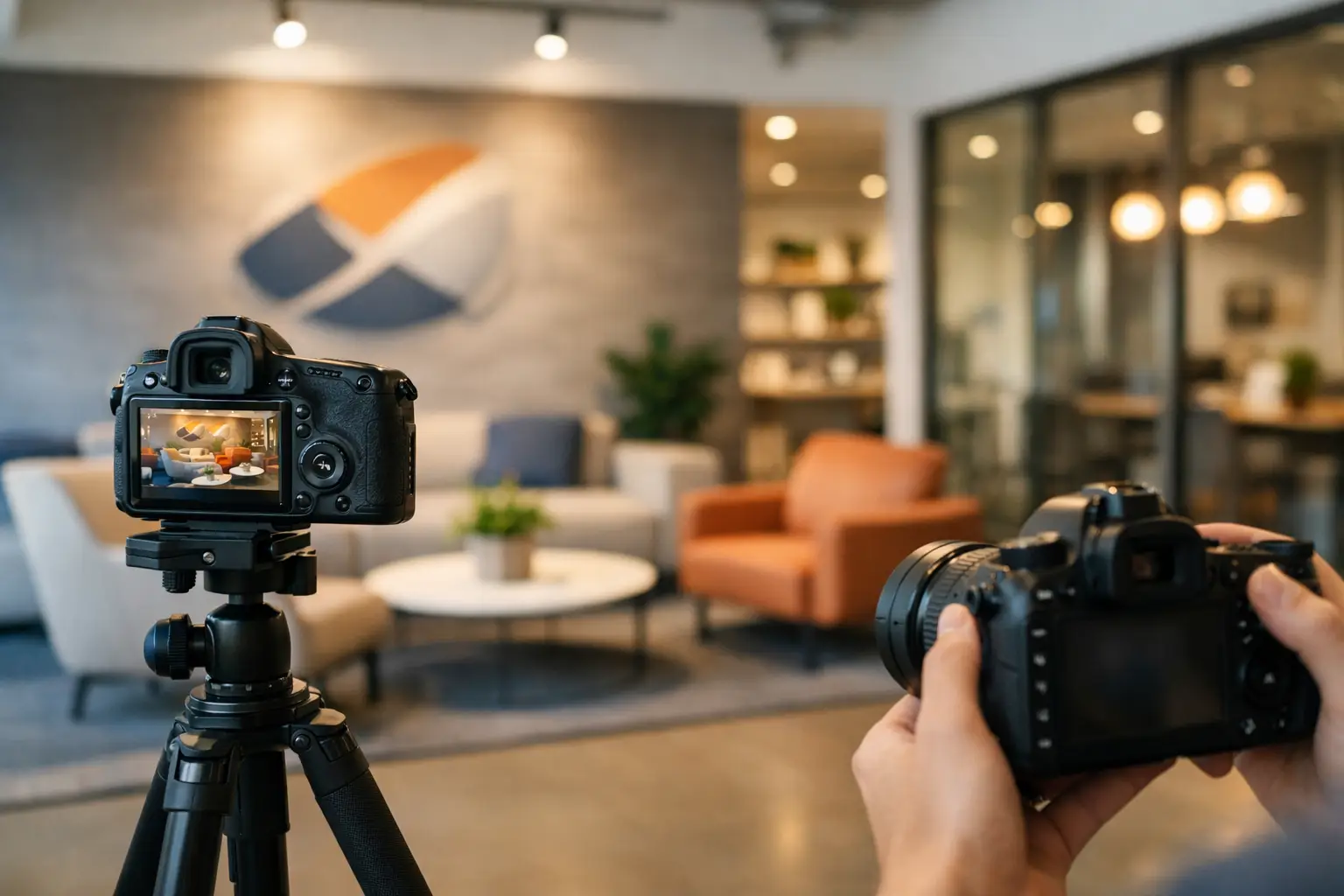
A branded workspace is more than an office with a logo on the wall. It is evidence of how a company thinks, works, hosts clients, builds products, and treats its people. Learning how to photograph branded workspaces means translating those details into images that feel intentional rather than staged – images that give prospective customers, recruits, and partners a reason to trust what they see.
The strongest workplace photography does not simply document square footage. It gives a brand a visual setting for its story. A well-designed reception area can communicate confidence. A production floor can show precision and scale. A shared table, a material sample, or a team in conversation can make a business feel accessible and real.
Start With the Brand Story, Not the Room
Before a camera comes out, establish what the photographs need to say. A law firm may need to convey discretion, expertise, and calm. A hospitality brand may want energy, warmth, and thoughtful service. An industrial manufacturer may need to demonstrate safety, technical capability, and the people behind complex work.
That distinction shapes every decision, from the locations selected to the lens choice and the amount of motion in a frame. Bright, open images with active team moments suit some brands. Others benefit from a more composed visual language, with clean geometry, controlled lighting, and purposeful negative space for marketing copy.
A useful creative brief identifies the audience, primary uses, brand values, visual references, must-show areas, and what should not appear. It should also answer a simple question: when someone sees these images, what should they believe about the business?
This early collaboration prevents a common problem: beautiful photographs that do not serve a commercial purpose. An image can be technically excellent and still miss the mark if it looks disconnected from the company’s personality or customer promise.
Plan How to Photograph Branded Workspaces Around Use
Workspace photography works hardest when it is planned for the channels where it will appear. A website banner needs a different composition than an annual report, a recruitment campaign, or a social post. Marketing teams often need both wide images that establish place and tighter details that support a message.
Build a shot plan with enough range to create a useful image library. Include the exterior or arrival experience when it adds context, then photograph the spaces that best represent the organization: reception, meeting rooms, work areas, customer-facing zones, production facilities, or amenities. Capture portraits and candid interactions where people are central to the story.
Leave room around selected subjects in some frames. This copy space gives designers flexibility for headlines, calls to action, and different crop formats. It is a small production choice with a major effect on how long an image remains useful.
Timing matters as much as composition. Photographing a restaurant before service can allow careful styling, while a controlled period during service may provide the real human energy the brand needs. In an industrial environment, operational photography must be scheduled around safety procedures, production demands, and site access. The right approach depends on whether polish, authenticity, or a balance of both is the priority.
Prepare the Space Without Removing Its Character
A workspace should look ready, not sterile. Remove clutter that distracts from the frame: loose cables, empty coffee cups, temporary signs, personal items, damaged furniture, and mismatched supplies. Check that brand materials are current, screens display approved content, and visible signage is accurate.
But do not overcorrect. A perfectly empty desk can feel less believable than a thoughtfully arranged active workstation. A few relevant tools, notebooks, prototypes, menus, samples, or branded materials can reveal the nature of the work. The goal is editorial order, not a showroom that no one recognizes.
Walk every location before the shoot. Look for visual interruptions such as burnt-out lights, scuffed walls, awkward reflections, competing colors, and exterior views that draw attention away from the subject. Assign someone who knows the space to make small adjustments throughout the day. This keeps the production moving while protecting image quality.
Treat Light as Part of the Brand Experience
Light changes the emotional reading of a workplace. Natural light can make a space feel open and human, while directional supplemental light can bring shape and polish to architectural details. In offices with mixed lighting, photographers often need to manage the color cast from windows, overhead fixtures, monitors, and practical lamps so the result feels consistent and refined.
Avoid relying on overhead lighting alone. It can create flat faces, dark eye sockets, and an uninviting color balance. Instead, use the available light as a foundation and shape it as needed. For broad environmental images, a careful blend of ambient and added light can preserve the atmosphere while ensuring the important elements read clearly.
Reflective surfaces deserve particular attention. Glass partitions, polished tables, monitors, and stainless steel can reveal unwanted reflections, including the photographer and equipment. Slight adjustments in camera position, subject placement, and light direction often solve the issue without changing the room’s character.
Compose for Scale, Detail, and Human Connection
A credible branded workspace story needs visual variety. Wide photographs establish the architecture, layout, and identity of the environment. Medium frames show teams using the space. Close details provide texture and evidence: hands at work, product finishes, branded stationery, tools, food preparation, design sketches, or a welcoming interaction with a customer.
Wide shots should be carefully controlled. Keep vertical lines straight when architecture is a feature, and avoid placing a subject where it appears to grow out of a lamp, sign, or furniture edge. Look for leading lines and repeated forms, but do not let symmetry become a formula. A slightly asymmetrical image can feel more natural when people are part of the scene.
People transform workplace photography from real estate documentation into brand storytelling. The key is to direct them with enough clarity that the scene reads well while allowing behavior that feels believable. Give participants a simple task: review a sample, prepare an order, inspect a component, welcome a guest, or discuss a project. Specific actions produce more authentic gestures than asking people to “act natural.”
Not every business needs smiling groups gathered around a table. For some teams, quiet concentration, technical work, or a one-on-one client exchange will be more faithful to the brand. Representation matters as well. Choose participants and scenes that reflect the people who actually make the organization work, rather than relying on generic corporate imagery.
Make Brand Elements Visible, but Not Forced
Logos, colors, packaging, uniforms, and environmental graphics are valuable visual anchors. They can make an image instantly recognizable across a website, campaign, or editorial placement. Still, branding is most effective when it feels integrated into the scene.
A logo wall may deserve a clean hero image, particularly when it is part of the client arrival experience. Beyond that, look for subtler appearances of the brand: a color repeated in furniture and signage, a uniform in motion, product labels on a shelf, a menu on a table, or a brand statement visible in the background. These details create recognition without making every frame feel like an advertisement.
Be careful with readable text. If a sign, monitor, whiteboard, or document is visible, every word needs review. Confidential information, outdated messaging, competitor marks, and unapproved claims can create problems after the shoot. A final visual sweep is far easier than retouching or discarding a strong image later.
Build in Efficiency and Flexibility on Shoot Day
Commercial photography requires a clear production rhythm. Group images by location, lighting setup, and participant availability. Photograph clean empty-space frames before the room becomes active, then move into team interactions and close details. This approach minimizes interruptions and gives the client a strong range of assets without extending the schedule unnecessarily.
Expect the unexpected. A key employee may be called into a meeting, a workspace may be temporarily unavailable, or the weather may change the light at the windows. A strong shot plan provides direction, but it should never prevent the team from recognizing an unplanned moment that tells the story better.
The final selection and retouching stage should preserve consistency across the library. Color, contrast, skin tones, and architectural lines need to feel aligned from image to image. Retouching should refine distractions, not erase the real character of the business.
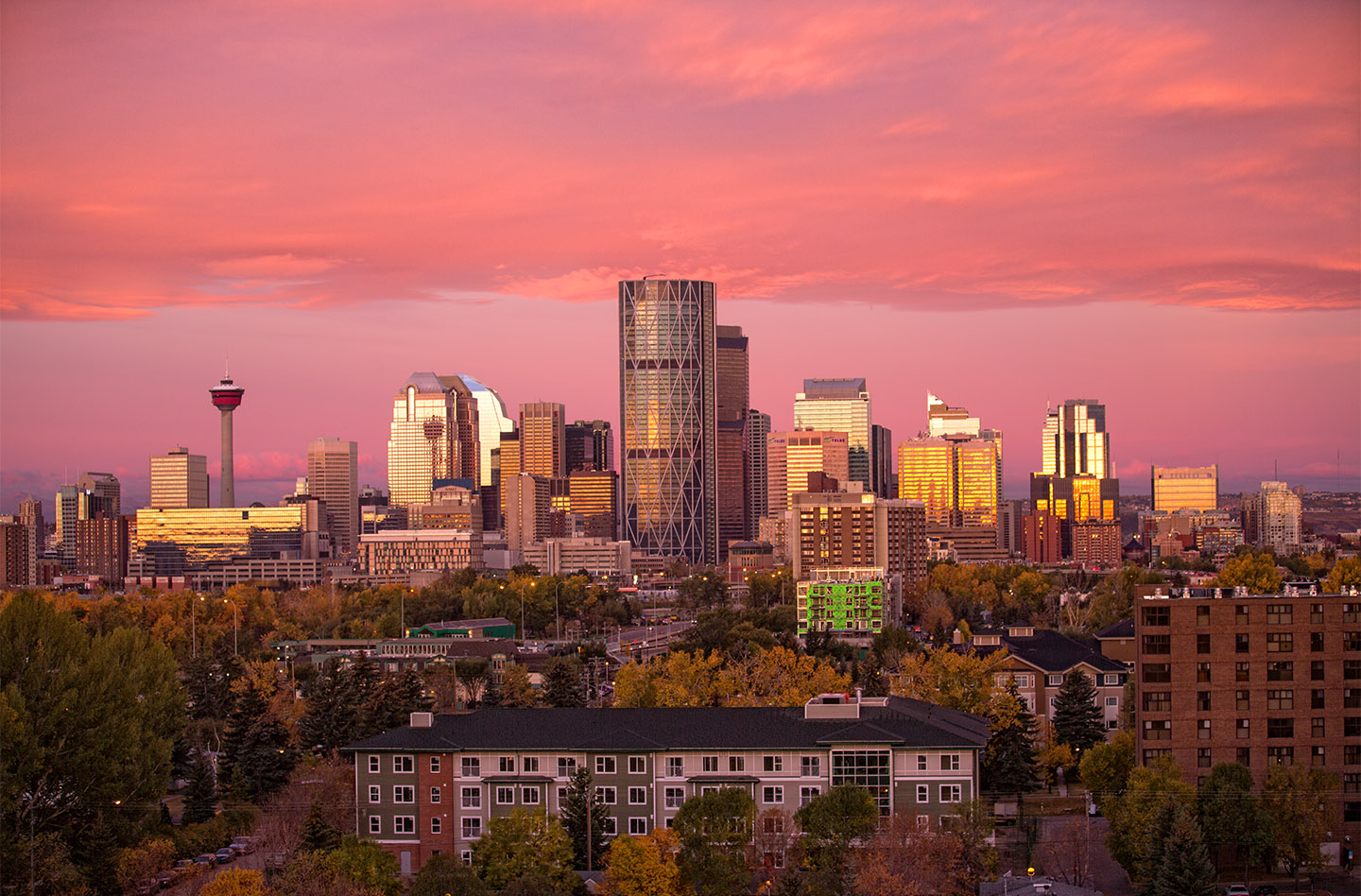
At Image Calgary, collaboration is the key to creating workplace photography that feels both polished and true. The most effective images come from a shared understanding of the brand, a prepared environment, and a production approach that makes room for genuine moments. When your workspace is photographed with that level of intent, it becomes more than a backdrop – it becomes proof of what your business stands for.