
A visitor gives your homepage only a moment to answer a practical question: is this business credible, relevant, and worth my attention? Website hero image photography shapes that decision before a headline is fully read. It is not simply a large, attractive photograph at the top of a page. It is a brand statement with a commercial job to do.
For a professional service firm, that statement may be confidence and clear expertise. For a manufacturer, it may be scale, precision, and the people behind the operation. For a restaurant, it may be the sensory promise of a meal guests want to experience. The strongest hero images make the right impression quickly while leaving room for the website message and next action.
What Website Hero Image Photography Needs to Do
A hero image carries more weight than most website photography because it establishes the visual standard for everything that follows. If it feels generic, overly polished, or disconnected from the business, visitors can sense the gap. If it feels specific and purposeful, it gives the brand immediate presence.
The image must support several needs at once. It should communicate what makes the business distinct, create an emotional response appropriate to the audience, work with the page layout, and remain effective across desktop and mobile screens. That combination is why a strong hero image should be planned as part of a website and brand strategy, not selected as an afterthought from a general image library.
The right result depends on the business. An executive portrait can be the right choice when trust in a founder or advisor is central to the sale. A wider environmental image may better serve an industrial company whose facilities, equipment, and process demonstrate capability. Lifestyle photography often works best when a product needs context and human connection. There is no universal formula, only a clear need to match the visual story to the decision a visitor is being asked to make.
Start With the Message, Not the Shot
Before discussing lighting, location, or camera angles, establish the single idea the homepage needs to communicate. A hero image cannot explain every service, product benefit, and company value. Trying to make it do so usually produces a busy composition with no focal point.
Ask what a qualified visitor should understand in the first five seconds. Perhaps the business is deeply experienced, distinctly local, highly technical, exceptionally welcoming, or built around a visible product innovation. That answer gives the creative team a useful filter for every production decision.
The accompanying headline matters just as much. Photography and copy should reinforce each other rather than compete for attention. If the headline speaks about hands-on expertise, the image should show real expertise in action. If the message is about a refined guest experience, the visual should feel considered, warm, and tangible. A mismatch between the words and image weakens both.
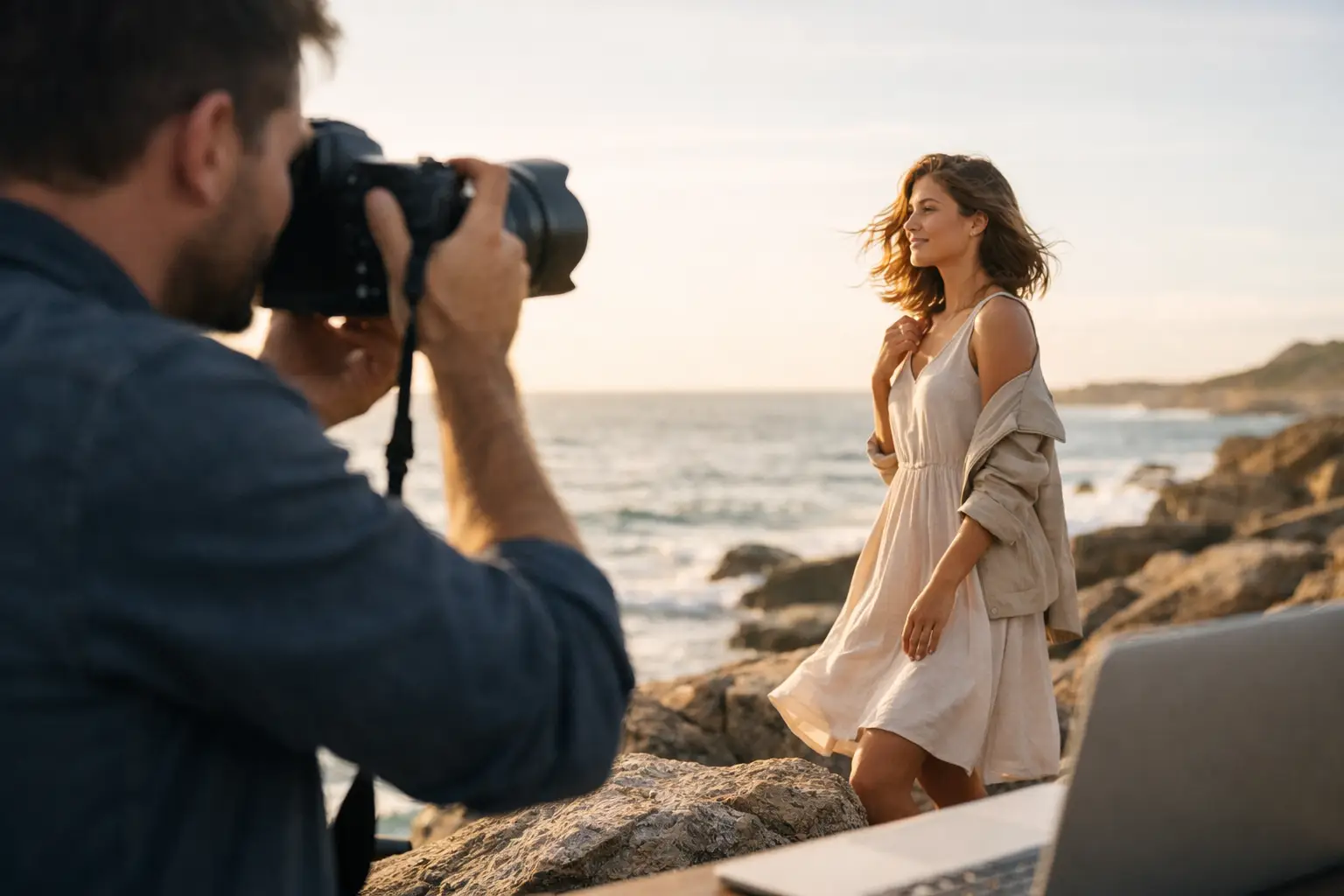
Collaboration is the key to creativity here. Marketing teams bring brand priorities, audience knowledge, and campaign goals. A commercial photographer brings an understanding of visual hierarchy, human expression, lighting, movement, and the practical realities of production. Together, those perspectives turn a broad request for a new homepage image into a focused visual concept.
Build the Image Around Real Brand Evidence
Stock photography can fill a temporary gap, but it rarely communicates the details that make a business believable. Visitors have become skilled at recognizing images that could represent any company in any city. They may not consciously identify the issue, but generic visuals create distance.
Original photography gives a brand access to its most persuasive assets: its people, products, workspaces, customers, processes, and point of view. A construction firm can show a crew working in a real environment. A hospitality brand can show the atmosphere created by its own staff and space. A professional services team can move beyond stiff headshots to create an image that conveys approachable authority.
Authenticity does not mean documenting everything without direction. The best commercial images are carefully shaped. Wardrobe, grooming, set styling, props, timing, and talent direction all affect whether the final scene feels credible and aligned with the brand. The goal is not accidental realism. It is a polished representation of what the business genuinely delivers.
For organizations with complex operations, this preparation is especially valuable. Industrial facilities, active job sites, kitchens, laboratories, and production environments present real safety, scheduling, and access considerations. A photographer who understands commercial production can build a plan around those realities while still creating imagery with energy and clarity.
Compose for Website Behavior, Not Print
A photograph can be visually exceptional and still fail as a hero image if it has not been composed for the webpage. Hero sections often crop differently depending on screen size. Text, navigation, buttons, and overlays also occupy valuable space. The composition must account for those elements from the beginning.
A useful hero image usually includes intentional negative space where text can sit without obscuring a face, product, or critical detail. The subject should have visual impact, but it should not be trapped in the center by default. On a mobile screen, a wide scene may crop into a much tighter vertical frame, so the most important element needs to remain visible in both formats.
This is where a website-first shot list earns its value. Rather than taking one beautiful horizontal frame and hoping it adapts, the production can capture alternate crops, tighter portraits, vertical compositions, and clean background options. Those variations give designers flexibility without diluting the campaign’s visual consistency.
Color and contrast deserve the same attention. If white text will sit over the photograph, the image needs enough tonal separation for the message to remain readable. If a dark overlay is required to make the copy work, it should enhance the mood rather than flatten the image. The final selection should always be reviewed in a realistic website layout, not only as a full-screen photograph.
Plan the Shoot for More Than One Page
A hero image may be the primary deliverable, but a well-planned commercial shoot can create an entire visual system. The same production can provide supporting banner images, service-page photography, social assets, recruitment imagery, editorial content, and campaign material. This approach creates better value and helps the brand appear consistent wherever prospects encounter it.
That does not mean every image should look identical. A website needs variety to maintain interest. It does mean the images should share an intentional visual language through lighting, color, styling, location choices, and the way people are represented. Consistency tells visitors that the business is organized, established, and clear about its identity.
A thoughtful pre-production process usually covers the homepage objective, target audience, locations, talent, styling, brand colors, intended crops, and the full list of planned uses. It also identifies potential constraints early. A seasonal exterior, a limited production window, an executive’s availability, or a restricted work area can all affect the creative approach. Solving those issues before shoot day protects both the schedule and the final result.
Avoid the Familiar Hero Image Mistakes
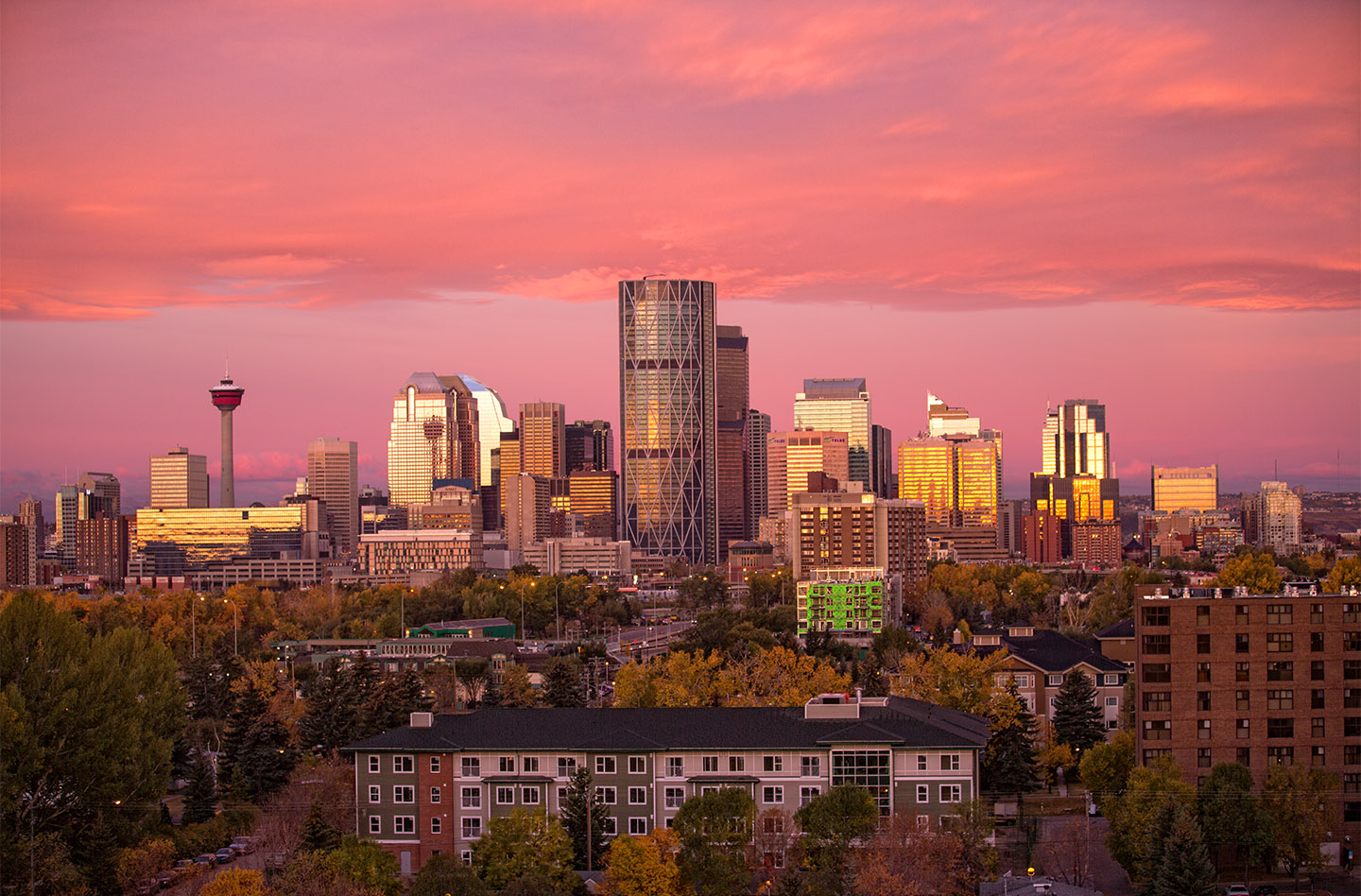
The most common mistake is choosing a photo based only on appearance. A dramatic skyline, a smiling team, or a close-up product detail may look strong in isolation, yet say little about the company. Visual appeal matters, but relevance is what gives a hero image strategic value.
Another issue is overcrowding the frame. When every person, product, logo, and service must appear at once, the image loses its center of attention. A hero should create curiosity and confidence, then let the rest of the website provide depth.
Finally, avoid treating mobile as a technical detail. A hero image that works beautifully on a large monitor can become unclear or awkward when cropped on a phone. Mobile review is part of the creative process, not a final quality check. Sometimes the answer is a separate mobile crop. Sometimes it is a different image altogether. The right choice depends on the composition and the importance of the subject.
Make the First Screen Feel Like Your Business
The most effective hero images do not feel inserted into a website. They feel inseparable from the brand behind it. They show visitors something real, make a clear promise, and create enough confidence for the next click.
At Image Calgary, that starts by understanding the story a business needs its audience to see. The final photograph may be a quiet portrait, an active workplace, a crafted product moment, or a bold aerial view. What matters is that it gives the homepage a reason to be remembered. When your website is ready for a stronger first impression, begin with the business truth that deserves to lead the frame.