
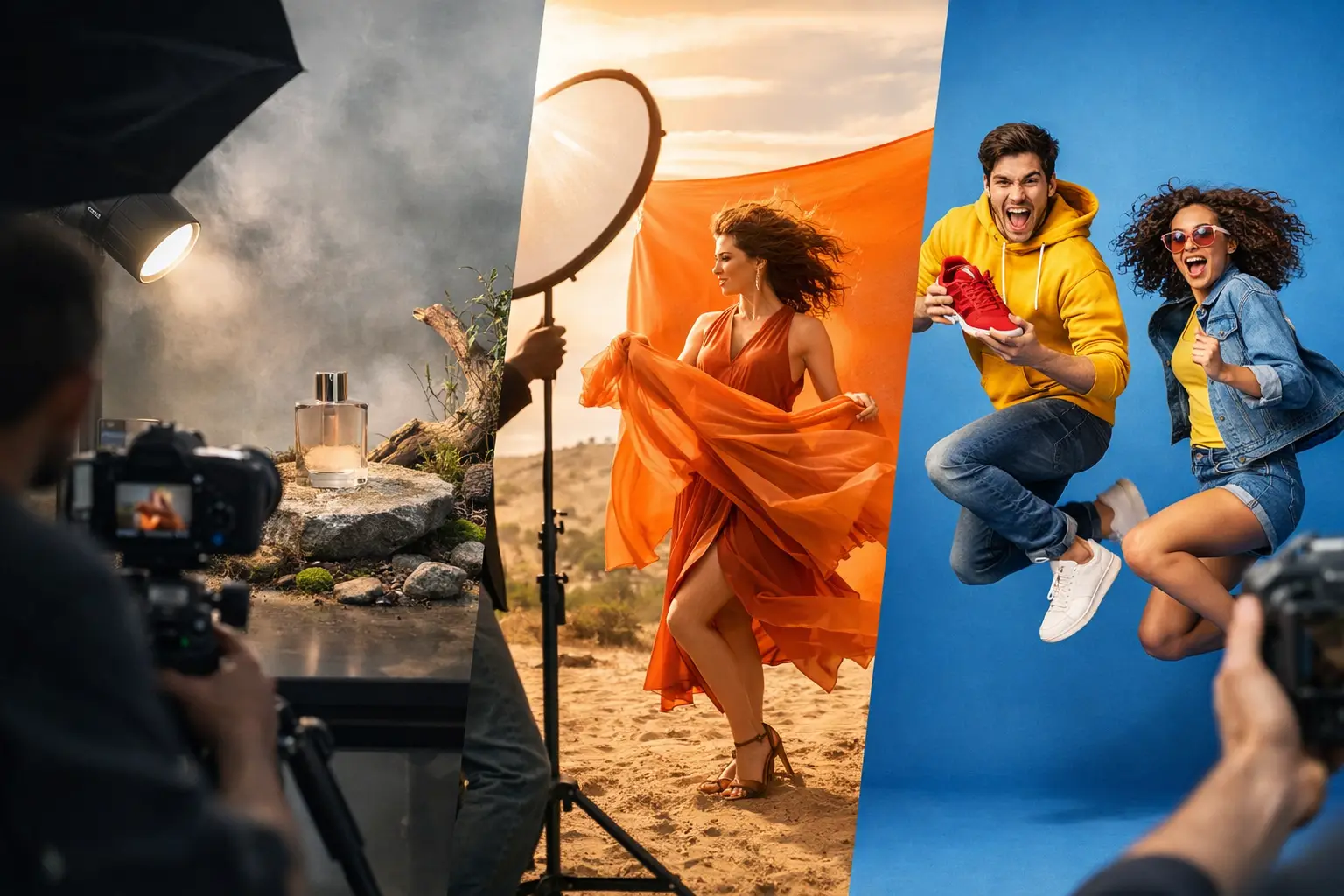
A campaign can have a sharp message, a strong media plan, and a well-designed landing page, yet still fail to hold attention if the visuals feel interchangeable. The best creative campaign photography concepts give an audience something immediate to feel, recognize, and remember. They turn a brand position into a visual point of view – one that can work across paid advertising, social content, print, web, editorial, and sales materials.
For business leaders and marketing teams, the goal is not simply to make attractive images. It is to produce a focused body of photography that makes the brand more credible, distinctive, and useful at every customer touchpoint.
Start With the Brand Tension
Strong campaign work begins before locations, props, or lighting are discussed. The first question is not, “What should we photograph?” It is, “What should people understand or feel differently after they see this?”
Most effective creative concepts are built around a tension the brand can resolve. A construction company may need to show that large-scale work can still be precise. A restaurant may want to communicate elevated food without becoming distant or formal. A professional services firm may need to look established while proving it is forward-thinking and accessible.
That tension creates direction. It informs the casting, color palette, composition, pace, wardrobe, and environments used in the campaign. Without it, a shoot can produce polished individual photos that do not add up to a recognizable message.
A concise creative brief should define the audience, campaign objective, key message, required deliverables, and intended placements. It should also establish what the imagery must not become. If authenticity is central to the brand, heavily staged expressions and generic office scenes are not small creative issues. They undermine the strategy.
Creative Campaign Photography Concepts Built for Business
The right concept depends on the business, its market position, and where the work will appear. These approaches consistently create room for distinctive storytelling while remaining commercially practical.
Show the work, not just the result
Many brands lead with finished products, completed projects, or polished spaces. Those images matter, but process often builds greater confidence. Photographing people solving problems, preparing materials, testing equipment, collaborating with clients, or applying specialized skill gives the audience evidence behind the claim.
For industrial, construction, manufacturing, and professional service brands, this approach can turn operational detail into a powerful campaign asset. The work should feel active and intentional, not like a documentary record of everything that happened that day. Careful framing, light, and timing help reveal the scale, expertise, and energy of the environment.
The trade-off is access and planning. Authentic process photography requires coordination around safety, schedules, work areas, and the people who make the operation run. The return is imagery competitors cannot easily copy.
Put people at the center of proof
Corporate photography often defaults to formal headshots or broad team photos. A campaign can go further by showing the people who create the customer experience: the chef plating a signature dish, the engineer reviewing a field plan, the advisor in a thoughtful client conversation, or the technician preparing for a demanding job.
The concept is not simply “people at work.” It is human expertise made visible. Expressions, gestures, and interactions should feel believable, with enough direction to maintain a polished visual standard. A real employee in a real environment will usually communicate more trust than a stock-style scene, especially when the business is selling experience, care, or specialized knowledge.
This approach works best when participants understand the purpose of the shoot. A short pre-production conversation can make people more comfortable and help the photographer identify genuine moments worth building around.
Use scale as a storytelling device
Scale can communicate ambition, capability, and perspective in a single frame. An aerial image of a large industrial site, a wide architectural view of a hospitality space, or a carefully composed scene that places a small person within a vast landscape can make the brand’s world feel significant.
Scale is especially valuable when a company’s capabilities are difficult to explain in a headline. Aerial photography, elevated viewpoints, and expansive environmental portraits can show the size of an operation while retaining the visual control needed for campaign use.
Still, scale should serve the message. A dramatic wide shot is not automatically useful if the subject becomes too small or the viewer cannot understand what is happening. Pairing broad perspectives with close detail shots often creates a more complete campaign library.
Create an unexpected contrast
Contrast is a reliable way to make familiar subjects more memorable. It might be refined tableware in a raw industrial setting, bold product color against a quiet neutral environment, or a highly technical process photographed with soft, human light. The contrast should reinforce the brand’s story, not exist only for visual novelty.
For example, a premium food or beverage campaign may use movement, texture, and atmospheric light to make a product feel sensory rather than static. A technology business might place advanced tools in the hands of the people they help, shifting the focus from features to real outcomes.
This is where creative direction matters most. A concept can feel fresh without becoming disconnected from the organization customers already know. The strongest visual surprises reveal something true about the brand.
Build a campaign around a single visual rule
Some of the most recognizable campaigns are simple because every image follows one clear rule. The subject may always be photographed in direct sunlight, against a specific color field, from a low angle, through a foreground element, or within a consistent architectural frame.
A visual rule creates cohesion across many formats and subject types. It also helps a campaign remain recognizable when images are cropped for digital ads, vertical social posts, website banners, or print layouts. For brands with multiple locations, products, or service lines, this consistency can bring a fragmented content library into one visual system.
The rule should leave room for variation. If it is too restrictive, every asset begins to look the same. If it is too loose, the campaign loses its visual signature. Collaboration between the marketing team and photographer is the key to finding that balance.
Plan for More Than the Hero Image
A campaign needs its major image: the one that carries a launch, headline, or large-format placement. But commercial value comes from the supporting frames that give the campaign range.
During pre-production, identify the image types needed around the hero shot. A complete shot plan may include wide environmental scenes, mid-range action, close details, portrait orientation, negative space for copy, and vertical compositions for mobile placements. This does not mean producing a repetitive checklist. It means designing with the full media plan in mind.
Campaign photography should also account for seasonality and longevity. If the work is intended to run for a year, avoid visual details that will make it feel dated within a few months unless timely relevance is part of the strategy. Wardrobe, signage, technology, and seasonal light all influence how long an image remains useful.
Direct the Details That Shape Perception
Creative concepts are often won or lost in the details. A slightly cluttered background, inconsistent wardrobe color, awkward hand placement, or distracting reflection can weaken a carefully considered image. These are not cosmetic concerns. They affect whether the audience perceives the business as attentive, credible, and premium.
Production design does not require an elaborate set for every campaign. It means making deliberate choices about what enters the frame and what stays out. In a workplace, that may involve cleaning a work area, selecting the right equipment, coordinating uniforms, or choosing the time of day with the best available light. In a product shoot, it may mean refining surfaces, styling supporting elements, and testing how packaging reacts to light.
At Image Calgary, collaboration is the key to creativity. When client knowledge of the business is combined with a photographer’s understanding of visual storytelling, the result is more than a collection of assets. It is photography with a clear role in the campaign.
Measure the Concept Against Real Use
Before approving a direction, test it against practical questions. Can it accommodate headline copy? Will it work in both horizontal and vertical formats? Does it show enough of the product, person, or environment to be understood quickly? Can the idea be produced within the available schedule, access, and budget?
There is no single right answer. A highly produced concept may be appropriate for a major brand launch, while a faster, location-driven approach may better serve an ongoing recruitment or content campaign. The important point is that production choices match the campaign’s commercial stakes.
The most effective campaign photography gives a brand a visual language it can keep using. Begin with the business truth worth showing, then give that truth a point of view people will want to look at twice.