

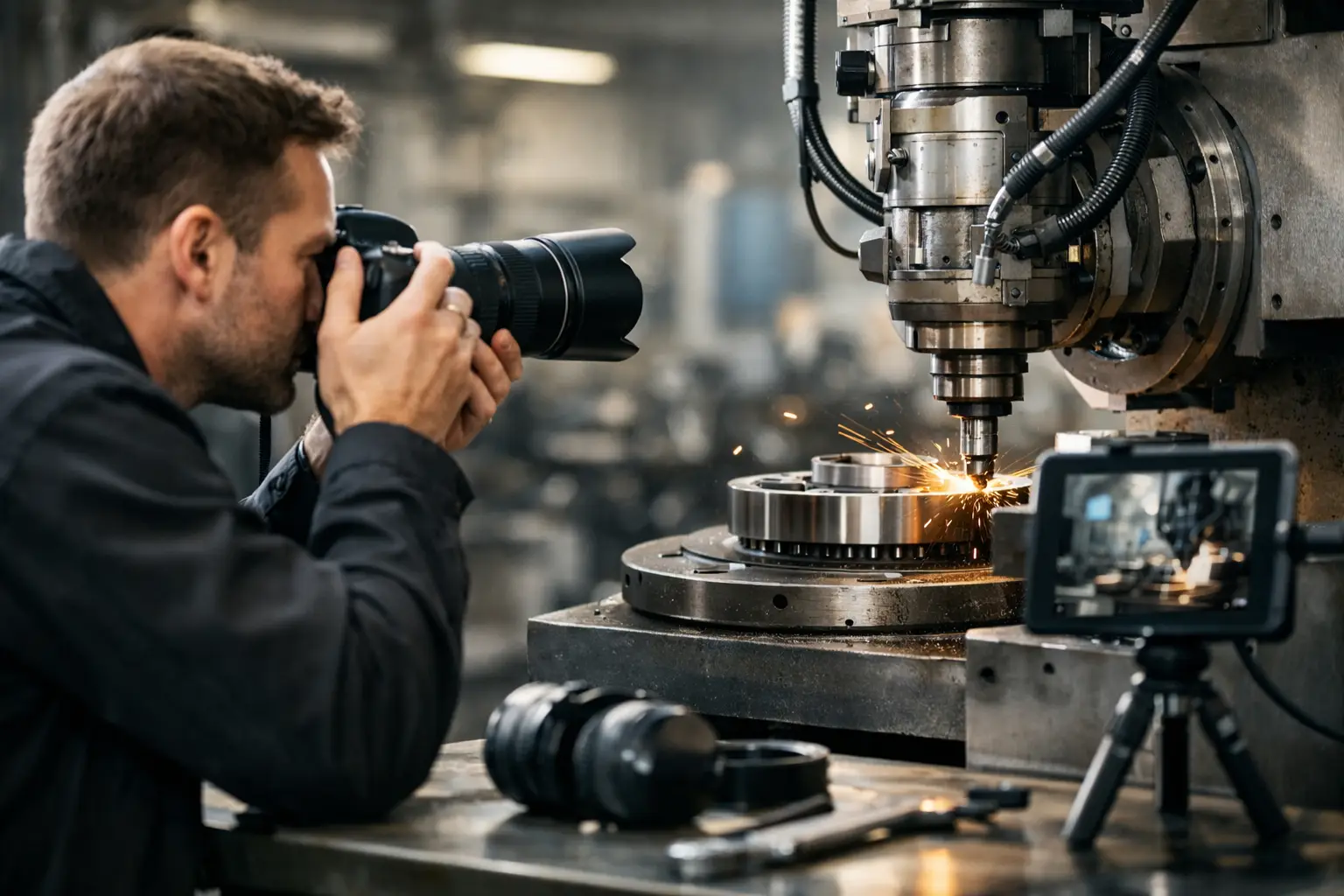
A machining center rarely looks like much from a phone camera: steel, hoses, controls, and a hard-to-read work area. But in the right image, it can communicate precision, capacity, investment, and the people who make the operation run. Can photographers shoot machinery? Absolutely. The real question is whether the shoot is planned around safety, production realities, and the brand story the images need to tell.
For industrial companies, machinery photography is not simply a record of assets. It is a way to show customers how work gets done, give prospective employees a clearer view of the workplace, and create credibility for proposals, websites, reports, recruitment materials, and campaigns. Strong images make complicated operations feel accessible without making them look simplistic.
Can Photographers Shoot Machinery Safely?
Yes, when the photographer works within the same safety culture expected of every visitor, contractor, and employee on site. Industrial photography begins well before a camera comes out of its case. A pre-production conversation should establish where the photographer can work, what equipment may be operating, which areas require an escort, and what personal protective equipment is required.
Machinery presents risks that are not always obvious in a still frame. Moving components, overhead loads, hot surfaces, confined work areas, forklift traffic, electrical panels, and noise all affect how a shoot should be approached. The photographer needs to respect barriers and exclusion zones, never ask a team member to bypass a guard or procedure for the sake of an image, and follow the site lead’s direction at all times.
There is also a practical distinction between photographing active equipment and staged equipment. Active production can create the most authentic visual energy: a welder at work, a CNC machine in motion, or material moving through a processing line. It also requires more coordination. Staged images allow cleaner compositions and controlled lighting, but they can feel disconnected from the people and process behind the work if overused. The best approach often uses both.
A good commercial photographer does not arrive with assumptions about how an industrial site operates. They arrive prepared to listen, work efficiently, and build a shot plan that protects the crew and the schedule.
Machinery Photography Is Brand Photography
A piece of equipment may be the subject, but it should not be the whole story. Buyers, partners, and future employees want evidence of capability. They also respond to the human judgment, technical skill, and standards behind that capability.
That is why the most useful industrial image libraries usually combine wide environmental scenes, detailed process images, operator portraits, and clean equipment visuals. A wide photograph can establish the scale of a facility. A close image of an operator setting a control or inspecting a finished component can show care and expertise. A carefully lit machinery detail can bring visual order to systems that might otherwise look chaotic.
These images work together. They give a marketing team more than a single hero photo and help maintain a consistent visual language across a website, sales presentation, annual report, social campaign, and recruitment materials.
The aesthetic decisions matter because they shape perception. Dramatic directional light can emphasize strength, heat, and craftsmanship. Brighter, more open lighting may better support messaging around cleanliness, quality assurance, or advanced technology. Neither choice is automatically better. The visual direction should reflect the company, its customers, and the intended use of the work.
Planning the Shoot Around Production
The most successful machinery shoots are collaborative. Before shoot day, the client and photographer should identify business priorities, priority equipment, key processes, available employees, and the final places the images will appear. That conversation determines what deserves time and what can be captured quickly.
For example, a fabrication company preparing a new website may need imagery that establishes facility scale and shows its range of services. A manufacturer bidding on specialized work may need close, technically accurate photographs that demonstrate tolerances, quality checks, and specific machinery. An employer brand campaign may place greater emphasis on the people operating and maintaining the equipment.
Production schedules should guide the plan. Some operations cannot pause, while others may have a short maintenance window that gives the photographer safer access and the team more flexibility. If a particular process produces sparks, steam, dust, or rapid motion, that information helps determine timing, lens selection, lighting placement, and safe shooting position.
A site walk-through is especially valuable for larger facilities. It reveals visual opportunities, bottlenecks, background distractions, and safety constraints before the day becomes busy. It also allows the photographer to spot details that can undermine an otherwise polished image, such as outdated signage, unapproved labels, cluttered staging areas, or confidential information on monitors and paperwork.
Not every imperfection should be removed. Industrial environments need to look like real working environments. The goal is not to manufacture a false picture of operations. It is to create a focused, professional view of the standards and people that define the business.
Lighting, Motion, and Technical Accuracy
Machine shops, plants, warehouses, and construction environments often have mixed lighting: daylight from doors or windows, overhead fluorescents or LEDs, task lighting, and occasional sparks or welding arcs. A photographer needs to manage those sources rather than flatten the scene with a direct flash.
Additional lighting can shape equipment, separate an operator from a busy background, and reveal texture in metal, paint, or finished parts. Yet lighting equipment must be placed carefully. It cannot obstruct walkways, create trip hazards, interfere with production, or enter restricted areas. In some facilities, available light and a minimal footprint are the smartest solution.
Motion creates another decision. Freezing a spinning tool or moving conveyor can show detail and precision. A slower shutter speed can add controlled blur that makes the process feel active. Both can be effective, provided the image remains truthful. Industrial imagery should never imply an unsafe practice or depict an operator interacting with machinery in a way the company would not permit on a normal workday.
Technical accuracy extends to the people in the image. PPE should match site requirements. Equipment should be operated normally. If a worker is positioned for a portrait, they should still appear credible in the environment. Experienced employees notice when a photograph gets these details wrong, and so do clients who understand the work.
What Makes a Machinery Image Useful After the Shoot
A strong image is not only attractive at full width on a homepage. It must also work when cropped vertically for social media, paired with copy in a brochure, or placed inside a presentation template. Planning for variation matters.
Photographers can capture wide compositions with space for headlines, horizontal images for web banners, vertical frames for editorial use, and detailed images that support individual service pages. A range of angles and moments gives the marketing team room to use the images without repeating the same visual message.
Consistency is equally valuable. When new machinery, a facility expansion, or an additional production line is photographed later, matching the original visual approach protects brand cohesion. This is where working with a commercial photography partner that understands the company’s prior imagery and strategic direction can save time and preserve quality.
At Image Calgary, collaboration is the key to creativity. For industrial clients, that means understanding the work before defining the photographs: the capabilities worth showing, the people who represent the business well, and the conditions that make the shoot safe and productive.
Questions to Settle Before the Camera Arrives
A clear brief avoids last-minute decisions on the shop floor. Confirm who will be the site contact, what access and PPE are required, whether any equipment or areas are off-limits, and whether employees need to be notified or provide image consent.
It is also wise to identify confidentiality concerns early. Machinery itself may reveal process details, product designs, customer names, serial numbers, screens, or proprietary tooling. The photographer can compose around sensitive elements, while a final review process gives the client confidence before images are released.
Finally, agree on the desired feeling. Should the images feel exacting and technical, energetic and people-focused, premium and polished, or rooted in the scale of a Western Canadian operation? A shared creative direction helps every practical decision serve the same commercial purpose.
The machinery already tells part of your story. With a thoughtful plan, the photography can show the skill, standards, and ambition that make it meaningful.