

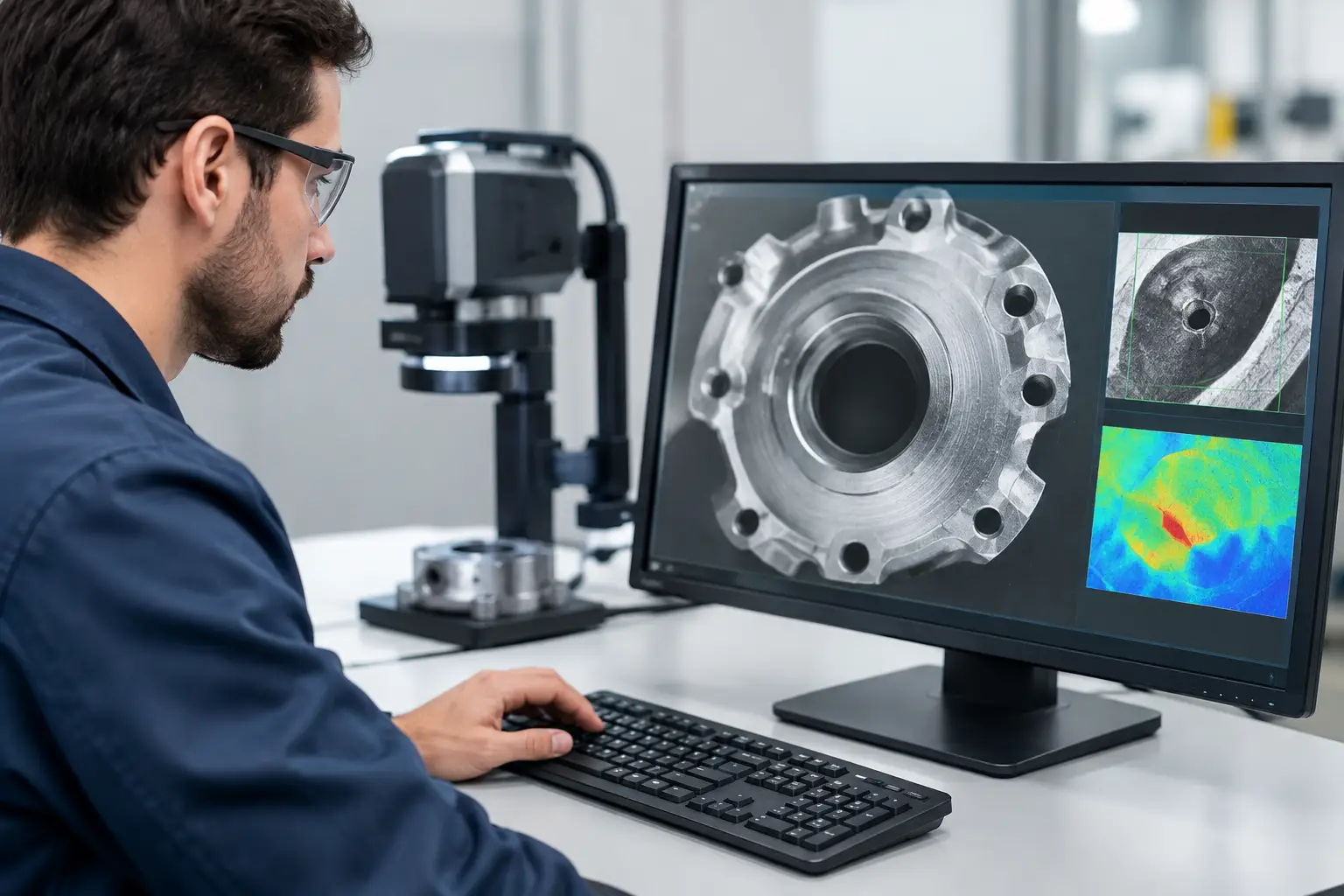
A refinery turnaround, a fabrication floor, a drilling operation, or a major construction site can be difficult to explain from a boardroom. Industrial imaging gives people outside the work a direct view of the scale, skill, systems, and people behind it. Done well, it replaces generic claims with visual evidence that feels credible, considered, and true to your business.
For industrial companies, photography is not simply a record of what happened on site. It is a working brand asset. It can help a prospective client understand your capabilities, show job candidates the quality of your environment, support a proposal, document progress for stakeholders, or give a communications team a stronger story to publish.
What Industrial Imaging Should Accomplish
Industrial operations are often visually complex. There are large facilities, technical equipment, safety protocols, layered processes, and teams whose expertise may not be obvious to someone unfamiliar with the work. Strong industrial photography brings order to that complexity without making the operation feel staged or simplified.
The goal is to show both the big picture and the details that prove competence. A wide image may establish the scale of a plant or job site. A closer frame can reveal the precision of a welder, the calibration of an instrument, the texture of a finished component, or the focus of a crew member during a critical task. Together, those images create a fuller story of how your organization works.
That matters because buyers, investors, partners, and future employees are making judgments long before a meeting. They notice whether a company appears prepared, capable, safety-minded, and proud of its people. Original photography gives those impressions substance.
Beyond Documentation: Images With a Job to Do
There is a difference between taking photos at an industrial site and producing imagery that supports a brand. Documentation may be essential for a project archive or internal report. Brand-focused photography begins with a different question: what should this audience understand, feel, or trust after seeing these images?
For a manufacturer, the answer may be quality control and production capacity. For an energy services company, it may be technical expertise in demanding field conditions. For a construction firm, it may be the ability to execute safely, on schedule, and at scale. The right visual approach follows that business objective.
This is where collaboration changes the result. Before cameras arrive on site, a photographer should understand which services matter most, who the images need to reach, where they will appear, and what makes the company distinct. A recruitment campaign needs more human connection than a capabilities brochure. A website hero image needs room for copy and a clear focal point. An editorial feature may call for candid moments and a stronger sense of place.
One well-planned shoot can serve several of these needs, but not if every image is treated as interchangeable. A focused shot list creates the range required for marketing while leaving room to respond to real moments as they happen.
The people are part of the proof
Industrial companies sometimes default to equipment-only photography. Machinery can be impressive, but it rarely tells the complete story. The people operating, inspecting, building, managing, and maintaining that equipment are often the strongest expression of a company’s standards.
Authentic team photography helps an organization look more accessible without losing technical credibility. It can show attention to safety, pride in craftsmanship, teamwork under pressure, and the experience behind a finished result. The best images do not ask workers to perform for the camera. They place real work in clear, well-composed frames and respect the pace of the site.
Planning an Industrial Photography Shoot
Good industrial imaging begins well before the first frame. Access, safety, timing, and production realities all shape what is possible. A planning conversation should cover site orientation, required personal protective equipment, safety training, restricted areas, escort requirements, and any processes that cannot be interrupted.
It should also identify visual priorities. Which areas represent the company best? Are there scheduled milestones worth capturing? Will the facility be active, cleaned, or under maintenance on the shoot day? Is there a project representative who can help identify meaningful moments that a visitor could easily miss?
Light is another practical consideration. Many industrial spaces combine dim interiors, bright exterior openings, reflective metal, high ceilings, and fast-moving activity. Those conditions call for technical control and a flexible production approach. Supplemental lighting can bring shape and clarity to a portrait or detail shot, but it is not always appropriate or permitted. In some environments, working with available light is the safer and more efficient choice.
The strongest plan balances preparation with realism. A facility should look organized and professional, but it should still look like a functioning facility. Over-cleaned spaces, unnecessary staging, or overly posed workers can weaken the credibility that industrial photography is meant to build.
Safety and Trust on Site
A photographer entering an industrial environment is joining a live operation. Safety cannot be treated as a creative inconvenience or an item to address after the schedule is set. It informs where the crew can stand, how equipment can be used, what angles are available, and how quickly the work can move.
A professional approach means following site rules, respecting active work zones, wearing the required gear, and communicating clearly with supervisors and crews. It also means knowing when not to take the shot. No image is worth creating a distraction around heavy equipment, an energized process, or a task that requires complete attention.
Trust is just as important. Employees may be unsure why photography is happening or concerned about being portrayed inaccurately. Clear communication helps. When people understand that the goal is to show the quality of their work and the reality of the operation, they are more likely to be comfortable and cooperative.
Creating a Visual Library, Not a One-Time Gallery
A few strong images can improve a presentation. A purposeful image library can strengthen an entire brand. Industrial companies often need visuals across websites, proposals, annual reports, case studies, social channels, trade publications, recruitment materials, internal communications, and media announcements.
That range calls for variation. It is helpful to capture horizontal and vertical compositions, wide environmental scenes, medium action frames, close technical details, individual portraits, group interactions, and images with negative space for design use. Different departments will need different formats, even when they are telling the same larger story.
Consistency also matters. If a company updates its website with polished, modern site photography but continues to use outdated employee headshots or low-resolution project images elsewhere, the brand loses cohesion. Planning periodic photography around major projects, seasonal conditions, new equipment, and team growth keeps the visual library current.
At Image Calgary, the process is built around that broader purpose: understanding the brand story first, then creating images that carry it across the places clients and audiences will actually see it.
The Trade-Off Between Polish and Authenticity
Industrial imagery should look refined, but refinement is not the same as perfection. A dramatic, carefully lit image can be valuable for a campaign or cover. A candid process image may be more persuasive in a case study because it feels immediate and specific. Both have a place.
The right balance depends on the audience and the intended use. Highly stylized photography can elevate a brand, but too much visual gloss may feel disconnected from a hands-on company culture. On the other hand, purely observational images can lack the structure needed for a major marketing application. The answer is usually a considered mix: composed images that lead the story, supported by real operational moments that make the story believable.
Editing should follow the same principle. Accurate color, controlled contrast, and thoughtful retouching help industrial environments look their best. Removing every trace of grit, wear, or weather can remove the character that makes the work feel real.
Make the Work Easier to Understand
Your operation may be technical, but your visual communication should not make audiences work harder than necessary. Strong industrial photography gives people a clear point of entry. It shows what happens, who makes it happen, and why the work deserves confidence.
The next time you plan a campaign, project announcement, recruitment effort, or website refresh, start with the story your images need to carry. The most effective photographs will not merely show your industry. They will make the value of your work immediately visible.