

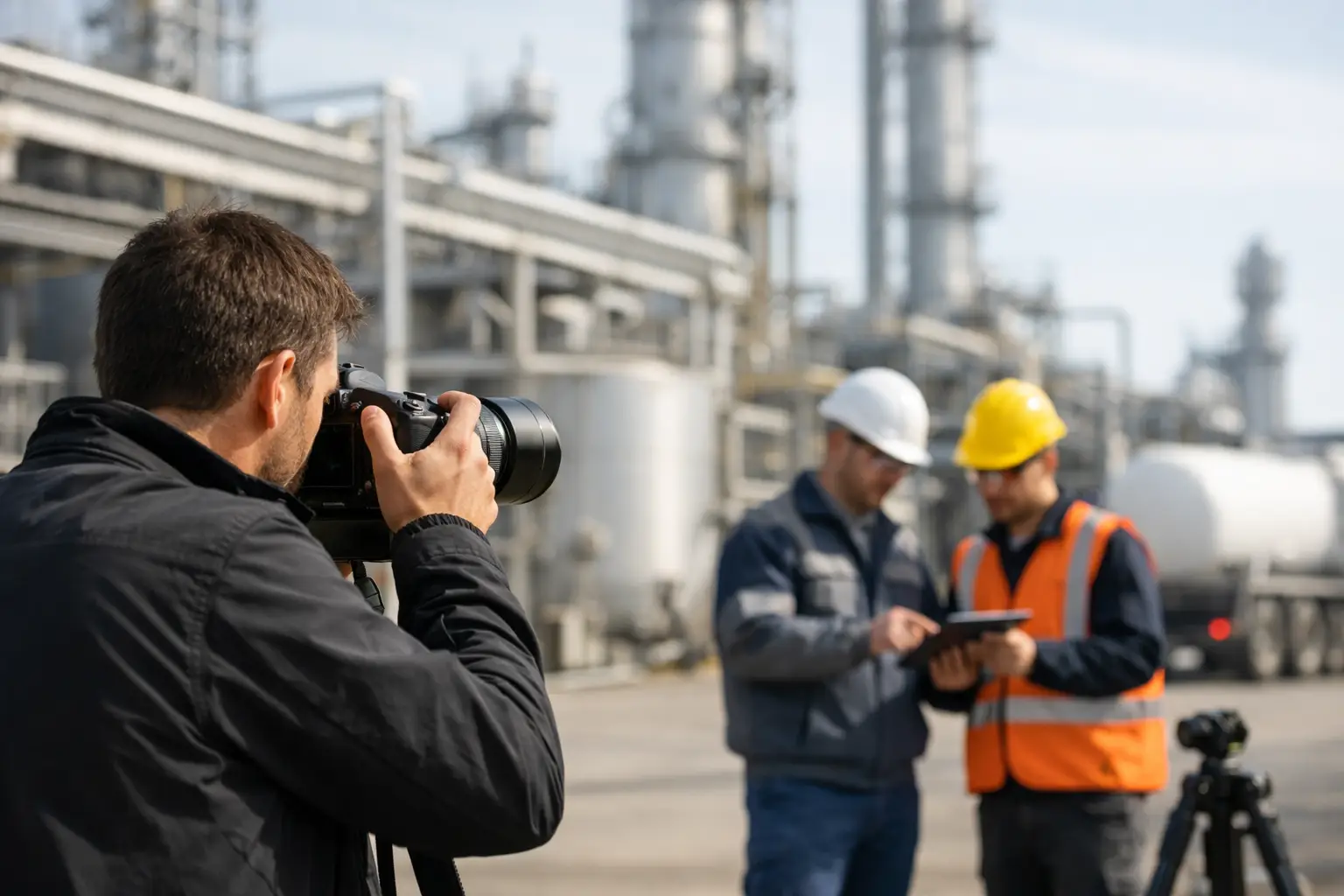
A strong industrial image does more than show equipment. It shows capability, standards, scale, and the people behind the work. That is why an industrial site photography guide matters for companies that need visuals to support marketing, recruitment, corporate communications, and sales. When the setting includes active machinery, safety protocols, and complex operations, the photography has to do more than look good – it has to feel accurate, intentional, and aligned with the brand.
Industrial environments are visually rich, but they are not forgiving. Light changes fast. Access can be limited. Safety requirements shape every decision. And if the images feel staged or generic, the audience notices. The best industrial photography balances realism with polish so the final set feels credible to clients, employees, investors, and industry partners.
What industrial site photography needs to communicate
Industrial photography is often treated as documentation. For brand-focused businesses, that is only part of the job. The goal is to create images that reflect how a company operates and what it stands for.
That means thinking beyond wide shots of a facility. A strong visual set usually needs to show multiple layers of the business: the scale of the operation, the technical details, the team in action, the safety culture, and the human side of the environment. A refinery, fabrication shop, warehouse, processing plant, or construction site each carries a different visual language. The photography should reflect that difference rather than flatten every industrial space into the same style of image.
For marketing teams, this matters because industrial buyers respond to proof. They want to see competence, order, professionalism, and real working conditions. For recruitment and internal communications, the emphasis may shift toward culture, teamwork, and pride in the work. The same site can support both goals, but only if the shoot is planned with those outcomes in mind.
Planning an industrial site photography guide around business goals
The strongest shoots begin before anyone picks up a camera. Industrial photography works best when there is a clear understanding of where the images will be used and what each audience needs to see.
A website homepage may need one decisive hero image that communicates scale and confidence at a glance. A proposal deck may need cleaner operational details. Editorial placements often benefit from more natural, documentary-style frames. Social campaigns usually need a wider variety of crops, orientations, and moments. Without that discussion upfront, companies often end up with a gallery full of decent images that do not solve the actual communication problem.
This is also the stage where shot priorities should be defined. Not every area of a facility needs equal coverage. Some spaces are visually impressive but strategically unimportant. Others may look ordinary at first glance but become valuable because they show quality control, a skilled team, or a distinctive process. Collaboration is the key to creativity here. When the photographer understands the brand story and the operational priorities, the shoot becomes more focused and more useful.
Safety shapes every creative decision
An industrial site photography guide is incomplete without addressing safety first. In active industrial settings, access, movement, and timing are controlled for good reason. Photography cannot interrupt workflows or introduce risk.
The practical side of this is straightforward. Site orientation, PPE requirements, escort procedures, restricted zones, and communication protocols need to be confirmed before the shoot day. Just as important, the creative plan should respect those boundaries instead of fighting them. If a location requires distance from equipment, the visual approach has to adapt. If a process can only be photographed during a narrow production window, the schedule has to be built around operations rather than the other way around.
There is also a reputational side to safety. Audiences in industrial sectors are quick to spot images that feel careless or inaccurate. Incorrect PPE, unsafe positioning, or scenes that appear overly staged can undermine credibility fast. Good industrial photography protects the brand by showing work environments responsibly and truthfully.
The images that usually matter most
Every site is different, but the most effective industrial galleries tend to include a mix of scale, detail, process, and people. Wide environmental shots establish the size and complexity of the operation. Mid-range images show teams interacting with systems, tools, or production lines. Close detail shots bring texture and specificity, from weld sparks and control panels to gloved hands and material finishes.
People matter more than many companies expect. Industrial brands often default to equipment because it feels impressive and objective. But audiences connect faster when they can see experienced teams at work. A technician monitoring a process, an operator inside the environment, or a leadership figure on site can give the image context and emotional weight. It signals that the business is not just infrastructure – it is expertise in action.
That said, there is a trade-off. Some sites benefit from highly polished portraits within the industrial environment, while others need a more observational style that feels less produced. It depends on brand positioning and intended use. A recruitment campaign may lean into approachable team imagery. An investor-facing report may favor cleaner, more controlled compositions that emphasize order and professionalism.
Light, environment, and the reality of industrial locations
Industrial spaces are rarely built for photography. Mixed lighting, reflective surfaces, steam, dust, weather, and confined areas all affect the final image. This is where experience matters, because the site conditions often dictate the pace and visual strategy.
Some facilities look strongest when photographed with available light and minimal disruption. Others need added lighting to separate subjects, control contrast, or bring consistency across a series. Exterior industrial work brings another variable: timing. The same facility can feel flat at midday and dramatic in early or late light. If aerial imagery is part of the plan, weather, visibility, and safety clearance become part of the creative schedule as well.
The key is not forcing one visual formula onto every location. A fabrication floor, for example, may benefit from directional light and strong contrast that highlights energy and precision. A clean processing facility may call for a brighter, more structured look. Good photography responds to the environment while still holding a consistent brand standard.
Why brand consistency matters on industrial shoots
Many companies already have brand standards for design, messaging, and marketing materials, but imagery is where consistency often breaks down. Industrial visuals can end up looking disconnected from the rest of the brand if they are approached as simple site documentation.
That is a missed opportunity. The same questions used in other commercial shoots apply here: What tone should the images carry? Should they feel bold, refined, energetic, technical, approachable, or premium? How much emphasis should be placed on people versus process? Are the final images meant to feel cinematic, clean, documentary, or highly composed?
When those choices are intentional, industrial photography becomes a strategic brand asset rather than a one-off deliverable. This is especially important for companies using the images across multiple channels. A gallery that works on a website should also support brochures, trade show materials, recruitment campaigns, media requests, and social content without feeling fragmented.
Preparing your team for better results
Even strong locations can underperform if the people on site are not prepared. Industrial teams do not need to become models, but they do need a clear sense of the purpose of the shoot and what is expected.
The best approach is simple. Identify key personnel in advance, confirm wardrobe and PPE requirements, and make sure work areas are clean, safe, and operationally representative. If branded elements like vehicles, signage, uniforms, or equipment matter, they should be ready before the camera arrives. These details may sound small, but they have an outsized effect on whether the final images feel polished or improvised.
It also helps to choose participants who are comfortable being photographed while working naturally. Forced expressions and awkward poses can weaken otherwise strong industrial scenes. A good photographer will direct lightly, but authenticity starts with selecting people who reflect the company well in real conditions.
A practical industrial site photography guide for approvals and usage
The final value of the shoot depends on what happens after production. Industrial companies often need image libraries that serve multiple departments, so file organization, usage planning, and internal alignment should be considered from the start.
That means thinking about approvals, especially if sensitive processes, proprietary equipment, or regulated environments are involved. It also means selecting a range of images that can support both immediate campaigns and future needs. Sometimes the most useful frame is not the most dramatic one. A clean, versatile image with strong composition may be used far more often than a hero shot created for a single application.
For brands working across Western Canada, consistency across locations can be just as important as quality within one site. That is where a collaborative photography partner can bring real value. Image Calgary approaches this work with both visual discipline and commercial clarity, helping companies create imagery that feels credible in the field and persuasive in the market.
Industrial environments already carry a story of scale, effort, and expertise. The right photography gives that story structure, clarity, and presence. When the images are planned around safety, brand, and real business use, they do more than document a site – they help the company be seen the way it deserves.