
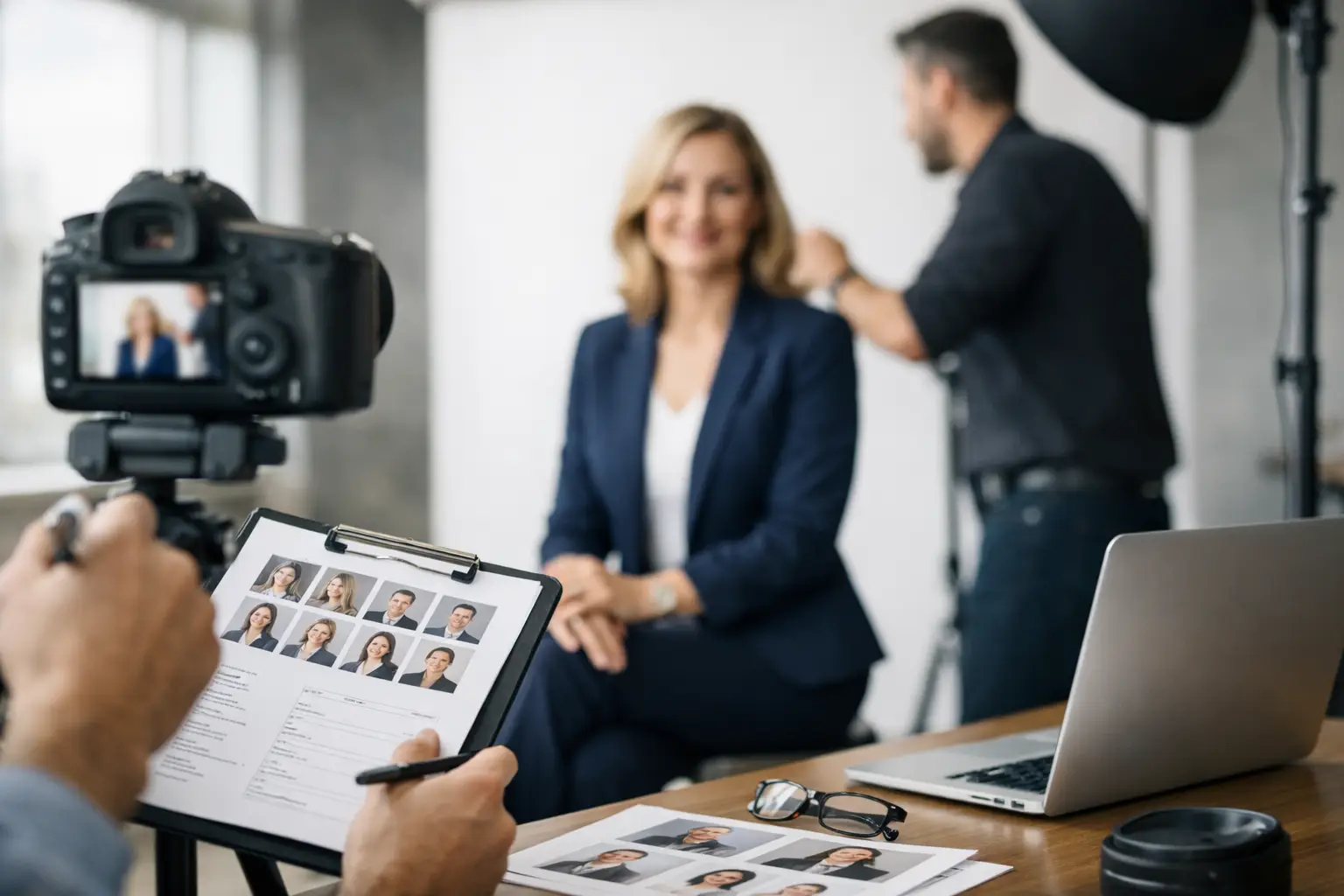
A corporate portrait session usually looks simple from the outside – book a photographer, gather the team, take the photos. In practice, the quality of the result depends on what happens before the camera comes out. If you are figuring out how to plan corporate portraits, the real work is aligning the images with your brand, your people, and the ways those portraits will actually be used.
That planning matters because corporate portraits do more than fill an About page. They shape first impressions, support recruiting, strengthen brand consistency, and help your business look credible across proposals, media features, social channels, internal communications, and marketing campaigns. When the portraits feel disconnected from the brand or inconsistent from person to person, the audience notices it immediately.
Start with the business purpose
The best portrait planning begins with a clear question: what do these images need to do for the business? For one company, the priority may be polished executive headshots for investor materials and speaking engagements. For another, it may be approachable team portraits that support recruiting and reflect company culture. A law firm, engineering company, restaurant group, and technology brand should not all plan portraits the same way.
This is where many teams lose momentum. They focus on scheduling before they define the visual objective. A better approach is to identify the main use cases first, then build the shoot around them. If the images need to work across a website, ad placements, trade publications, and internal communication, that affects everything from orientation and crop to background style and expression.
A useful planning conversation should cover where the portraits will appear, who needs to be included, how formal or relaxed the brand should feel, and whether the imagery needs to blend with existing marketing assets. Once those decisions are clear, the photography becomes more strategic and far more efficient.
How to plan corporate portraits around brand identity
Corporate portraits should feel like part of the same visual system as the rest of your brand. That does not mean every person needs the same pose against the same plain backdrop. It means the portraits should reflect the personality, positioning, and audience expectations of the business.
A financial services firm may want portraits that feel confident, clean, and understated. An architecture studio may benefit from something more editorial, with environmental context and stronger use of space. An industrial company may want portraits that balance professionalism with a real sense of the work environment. The right direction depends on the brand story you are telling.
This is also where wardrobe, background, lighting, and expression become business decisions rather than purely aesthetic ones. Dark, dramatic lighting can look refined for one brand and overly severe for another. A casual clothing direction may feel modern in a creative industry but undercut authority in a more formal sector. Good portrait planning accounts for those trade-offs early, before anyone is standing on set wondering what “professional but approachable” is supposed to look like.
Choose the right portrait style
There is no single correct format for corporate portraits. The strongest option depends on your audience and the image library you need.
Traditional headshots remain useful because they are efficient, consistent, and easy to deploy across many channels. They are often the right choice for large teams, leadership pages, and organizations that need a clean, uniform presentation.
Environmental portraits offer more narrative value. These images place people in a workplace, retail setting, hospitality space, or industrial environment, which adds context and personality. They work especially well when the business wants to show culture, expertise, or a connection to place.
A hybrid approach is often the smartest route. You may want one clean headshot setup for standard business use and a second environmental setup for marketing, editorial, or recruiting content. That creates flexibility without requiring a completely separate production.
Build a realistic shot list
Once the style and purpose are clear, define the scope. This sounds obvious, but it is often underestimated. If you need portraits for 25 people, do not simply note “team headshots” and move on. Clarify whether every person needs one final image or several. Decide if there are leadership portraits, department groupings, alternate crops, or branded environmental versions required.
A detailed shot list helps avoid common production issues. It reveals whether the session is a two-hour booking or a full-day schedule. It shows whether one setup is enough or multiple looks are required. It also reduces disruption for the client team because people can be scheduled in waves rather than waiting around all day.
When planning, account for new hires and likely staff changes. If your team is growing, create a repeatable portrait system with consistent lighting, framing, and background choices. That way, future additions do not stand out as visually disconnected.
Coordinate people, timing, and logistics
Portrait sessions succeed when logistics are handled with the same care as creative direction. This is where strong planning protects everyone’s time.
Choose a location that fits the brand and supports the technical requirements of the shoot. An office boardroom may be convenient, but not every office has enough space, clean sightlines, or reliable light. On-location portraits can feel authentic and efficient, but only if the setting is visually controlled. Busy backgrounds, mixed lighting, reflective surfaces, and constant foot traffic can slow production quickly.
Schedule people with buffer time. Corporate calendars are rarely predictable, and portrait sessions can be stressful for people who do not enjoy being photographed. A compressed schedule may look efficient on paper, but if one executive arrives late or one department meeting runs long, the entire session can slip.
It also helps to assign one internal point person. That person can manage call times, keep people moving, answer wardrobe questions, and approve on-brand decisions as the day unfolds. The result is a smoother production and fewer last-minute compromises.
Prepare your team for the camera
A common concern with corporate portraits is that employees will look stiff, uncomfortable, or inconsistent. The fix is not telling people to “relax” five minutes before they step in front of the camera. The fix is preparation.
Share wardrobe guidance in advance. Keep it simple and practical. Encourage solid colors over distracting patterns, well-fitted clothing over anything too loose or too tight, and choices that align with the level of formality your brand wants to project. If your team interacts with clients in suits, the portraits should not suddenly look startup-casual. If the culture is more relaxed, forcing everyone into overly formal styling can look just as inauthentic.
Grooming guidance matters too, especially for teams that want a polished and consistent result. That does not mean making people look identical. It means helping them arrive camera-ready and confident.
It is also worth setting expectations about the session itself. Let people know the process will be directed, efficient, and collaborative. Most non-professional subjects feel more comfortable when they understand they do not need to invent their own pose or expression.
Plan for consistency without making it generic
Consistency is one of the main goals in corporate portrait photography, but it should not flatten the personality out of the images. There is a difference between a cohesive image library and a rigid one.
The key is to standardize the elements that affect brand coherence – lighting, general framing, backdrop direction, retouching style, and overall tone – while still allowing each person to look like themselves. A leadership team should feel unified, but not interchangeable. The same goes for a broader staff gallery.
This balance is especially important for companies with multiple offices, ongoing hiring, or different departments that need slightly different image applications. When the visual system is planned properly, the portraits can stay cohesive over time while still leaving room for role-specific nuance.
Think beyond the headshot
If you are already organizing a portrait session, it often makes sense to capture more than the standard shoulder-up image. This is where planning can create much more value from the same production window.
A few additional frames can support website banners, media kits, social graphics, speaker bios, and campaign layouts. Horizontal compositions, negative space for copy, and wider environmental portraits give your marketing team more useful assets than a single tightly cropped headshot ever could.
This does not mean overcomplicating the shoot. It means thinking like a brand, not just a calendar coordinator. The most effective portrait sessions are built to serve multiple channels from the start.
At Image Calgary, that collaborative planning process is often what separates a routine photo day from a strong visual asset library. The photography works harder because the strategy behind it is clearer.
Review the final deliverables before shoot day
Before the session begins, confirm the basics. Final image count, file delivery needs, retouching expectations, aspect ratios, and usage priorities should all be agreed on. If your communications team needs vertical crops for social, your website team needs horizontal banners, and your leadership team needs publication-ready portraits, those requirements should inform the capture plan.
This step may feel administrative, but it prevents expensive rework. It also ensures the photographer can shoot with the final output in mind rather than trying to retrofit images after the fact.
Planning corporate portraits well is less about controlling every detail and more about making smart decisions early. When the brand direction is clear, the logistics are realistic, and the team knows what to expect, the session becomes more relaxed and the images become more useful. The camera captures confidence best when the process behind it is already organized.