
A guest can decide whether a restaurant feels worth the reservation before reading a single menu description. They notice the glow of the dining room, the texture of a plated dish, the confidence of the team, and the small details that signal care. The best photo ideas for restaurants do more than make food look appetizing. They turn the full guest experience into a visual reason to visit.
For restaurant owners and marketing teams, that distinction matters. A library of generic food shots may fill a social feed, but it rarely builds a memorable brand. The strongest restaurant photography shows what makes your concept, service, space, and menu impossible to confuse with the place down the street.
Best Photo Ideas for Restaurants Start With the Brand Story
Before selecting dishes or setting up lights, establish the story the images need to tell. A polished steakhouse, a neighborhood bakery, a chef-driven tasting menu, and a lively family restaurant can all serve excellent food, but their photography should not feel interchangeable.
Consider the emotional response you want to create. Is the goal to make guests feel welcomed, impressed, curious, nostalgic, energized, or transported? That answer shapes everything from styling and color palette to casting, camera angle, and the pace of the final image collection. Collaboration between the restaurant team, creative director, and photographer is the key to creating images with a clear commercial purpose.
1. Make the Signature Dish the Hero
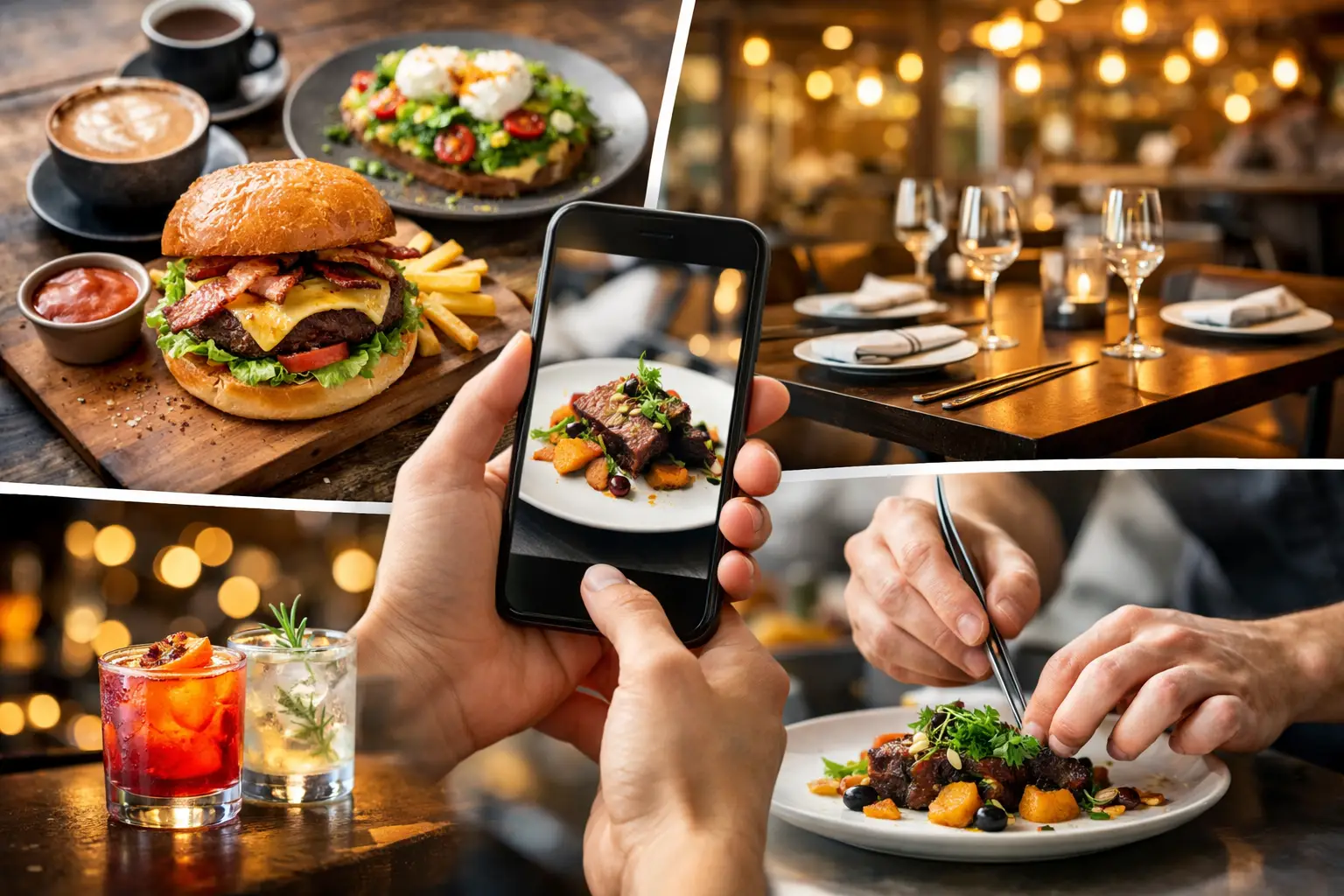
Every restaurant should have a few dishes that carry real visual and commercial weight. Photograph the menu item guests talk about, order repeatedly, or recognize instantly. This could be a perfectly charred ribeye, a towering sandwich, handmade pasta mid-twirl, or a dessert with an unmistakable finishing touch.
Hero food photography needs intention. Freshness, portion scale, garnish placement, plate choice, and lighting all affect whether the dish reads as premium, comforting, indulgent, or refined. Photograph it from the angle that best communicates its defining qualities rather than forcing every plate into the same overhead composition.
2. Capture the First-Pour Moment
Beverage images create movement and atmosphere in a way static table settings often cannot. A cocktail being poured over ice, a beer with a clean head, wine catching evening light, or espresso streaming into a cup gives the viewer a sensory cue. They can almost hear the ice settle and the room come to life.
This is especially useful for restaurants with strong bar programs, seasonal drinks, wine pairings, or specialty coffee. The image should still feel aligned with the brand. A dark, dramatic cocktail shot suits an intimate lounge; a bright, refreshing spritz may better fit a patio-focused concept.
3. Show the Dining Room Before Guests Arrive
An empty restaurant can still feel full of anticipation. Photograph the room just before service, when tables are set, chairs are aligned, light is at its best, and the space communicates its design without distraction.
These images are valuable for reservation platforms, event inquiries, website headers, and press materials. Wide interior photographs should be technically precise, but they should not feel sterile. A napkin folded with care, a candle ready to be lit, or sunlight landing on the bar can preserve the sense that people are about to gather there.
4. Photograph Real Hospitality in Motion
Service is part of the product. Images of a server presenting a dish, a bartender greeting regulars, or a host welcoming a group show the human experience behind the meal. They also give a restaurant an opportunity to communicate warmth, professionalism, and team culture.
The most credible hospitality photographs are directed, not over-scripted. Staff should look confident and engaged, while interactions need enough room to feel genuine. This is where an experienced commercial photographer can shape a scene without making it look staged.
5. Let the Chef’s Process Build Trust
Guests increasingly want to know how the meal comes together. A chef hand-finishing a plate, a baker scoring bread, a line cook working over open flame, or a prep team selecting ingredients makes craftsmanship visible.
Kitchen photography works best when it is focused and respectful of operations. The goal is not to document every station. It is to capture a few meaningful moments that show discipline, skill, and care. For concepts built around scratch cooking, local sourcing, or culinary technique, those images can carry as much brand value as the finished dish.
6. Use Ingredient Stories With Restraint
Beautiful ingredients can reinforce quality, seasonality, and provenance. Think bright herbs on a prep table, oysters arriving on ice, stone fruit at peak ripeness, or house-made dough ready for the oven.
The trade-off is that ingredient photography can become decorative if it has no connection to the actual menu or restaurant identity. Use it to support a message guests care about: a seasonal menu launch, a local producer relationship, a house specialty, or a signature preparation. A smaller collection of intentional ingredient images is more useful than a gallery of disconnected produce.
7. Photograph the Table as an Experience
A single plate sells a dish. A well-built table scene sells an occasion. Photographing shared plates, cocktails, hands reaching in, and thoughtfully styled place settings helps guests picture date night, a business dinner, a family celebration, or a long lunch with friends.
The right level of activity depends on the restaurant. Fine dining may call for elegant, restrained gestures, while a casual concept can benefit from visible energy and abundance. Casting, wardrobe, props, and table styling should support the audience you want to attract, not simply fill the frame.
8. Show Your Space at Its Best Time of Day
The same room can tell completely different stories at noon and at 8 p.m. Daylight may showcase an airy brunch service, architectural details, and a patio. Evening photography can emphasize warmth, atmosphere, and the social energy of dinner service.
Plan for both when they serve the marketing strategy. Daytime images tend to perform well for menus, lunch promotions, and event spaces. Evening images may be more effective for campaigns that promote ambiance, cocktails, or reservations. Timing is not a technical afterthought – it is part of the creative direction.
9. Create a Distinctive Exterior Image
The exterior is often the first visual cue for a new guest. A strong storefront, patio entrance, glowing sign, or recognizable architectural detail helps people find the restaurant and remember it.
Avoid treating this as a simple documentation shot. Photograph the exterior when weather, lighting, and surrounding activity support the brand. A busy urban restaurant may benefit from street energy, while a destination dining room may need a calmer image that lets the building and setting speak for themselves.
10. Document Private Dining and Group Occasions
Private rooms, large tables, catered spreads, and event-ready spaces deserve their own image set. Corporate planners and guests organizing celebrations need to see how the restaurant handles groups, not just individual dinners.
Show scale, flexibility, and polish. Include the room itself, a fully set table, service details, and one or two scenes with guests if appropriate. These photographs should make the planning decision easier by answering visual questions before an inquiry is sent.
11. Build Seasonal Campaign Images
Seasonal photography gives a restaurant a reason to refresh its marketing without changing its identity. Holiday menus, patio season, summer cocktails, harvest ingredients, and winter comfort food each offer a timely visual angle.
The most efficient approach is to plan seasonal content during a larger production day. A focused shot list can create material for social campaigns, email, menu updates, paid advertising, and media outreach. Image Calgary approaches this kind of production as a brand asset build, not a one-time content request, so each scene has a place to work after the shoot.
12. Reserve Room for Detail and Texture
Not every image needs to explain the whole restaurant. Close-ups of a linen napkin, a hand-thrown ceramic plate, a glowing candle, a menu embossed with the logo, or condensation on a cocktail can create visual rhythm across a campaign.
Detail images are particularly effective between wider food and lifestyle shots. They give designers flexibility, add a sense of place, and reinforce the choices that make the restaurant feel considered. The key is selecting details that belong to the brand rather than using props for their own sake.
Plan the Shoot Around Where Images Will Work
The best photo ideas for restaurants become more valuable when they are planned for real marketing needs. A website needs a balance of hero images, menu photography, interiors, team moments, and vertical crops. Social channels need motion, personality, and frequent variation. Advertising may require negative space for copy, while editorial placements often need authentic environmental scenes.
Build the shot list around those uses before production begins. Ask which images are needed for the next menu launch, reservation campaign, private event push, hiring effort, or press opportunity. Then prioritize the dishes, people, and spaces that will still represent the brand well six months from now.
Great restaurant photography should make a guest feel something specific before they arrive: appetite, anticipation, comfort, celebration, or curiosity. When each image is built around that feeling and connected to a clear brand story, the camera does more than record the meal. It gives people a compelling reason to make a reservation.