
A restaurant’s most persuasive moment often happens before a guest sees the menu. It happens on a website, in a social feed, or in a reservation search where one image has seconds to communicate flavor, energy, and confidence. The best photography shots for restaurants do more than make food look appealing. They show people what it feels like to choose your table.
For restaurant owners and marketing teams, the goal is not a folder full of attractive images. It is a focused visual library that supports reservations, private-event bookings, press outreach, paid campaigns, and an unmistakable brand identity. That requires a photography plan built around the experience you actually deliver.
The Best Photography Shots for Restaurants Build a Complete Story
A single hero dish can earn attention, but it cannot carry an entire brand. Guests want to understand the food, the room, the people, and the occasion. A chef-driven fine-dining restaurant needs a different visual balance than a high-energy neighborhood bar, a family-operated café, or a fast-casual concept built around speed and freshness.
The strongest restaurant photo library combines polished signature images with candid, human moments. It leaves room for seasonal menus and campaign needs while maintaining a consistent approach to color, light, styling, and composition. Collaboration is the key to creativity here: the photographer, chef, front-of-house team, and marketing lead should agree on what the restaurant needs guests to notice first.
1. The Signature Dish Hero
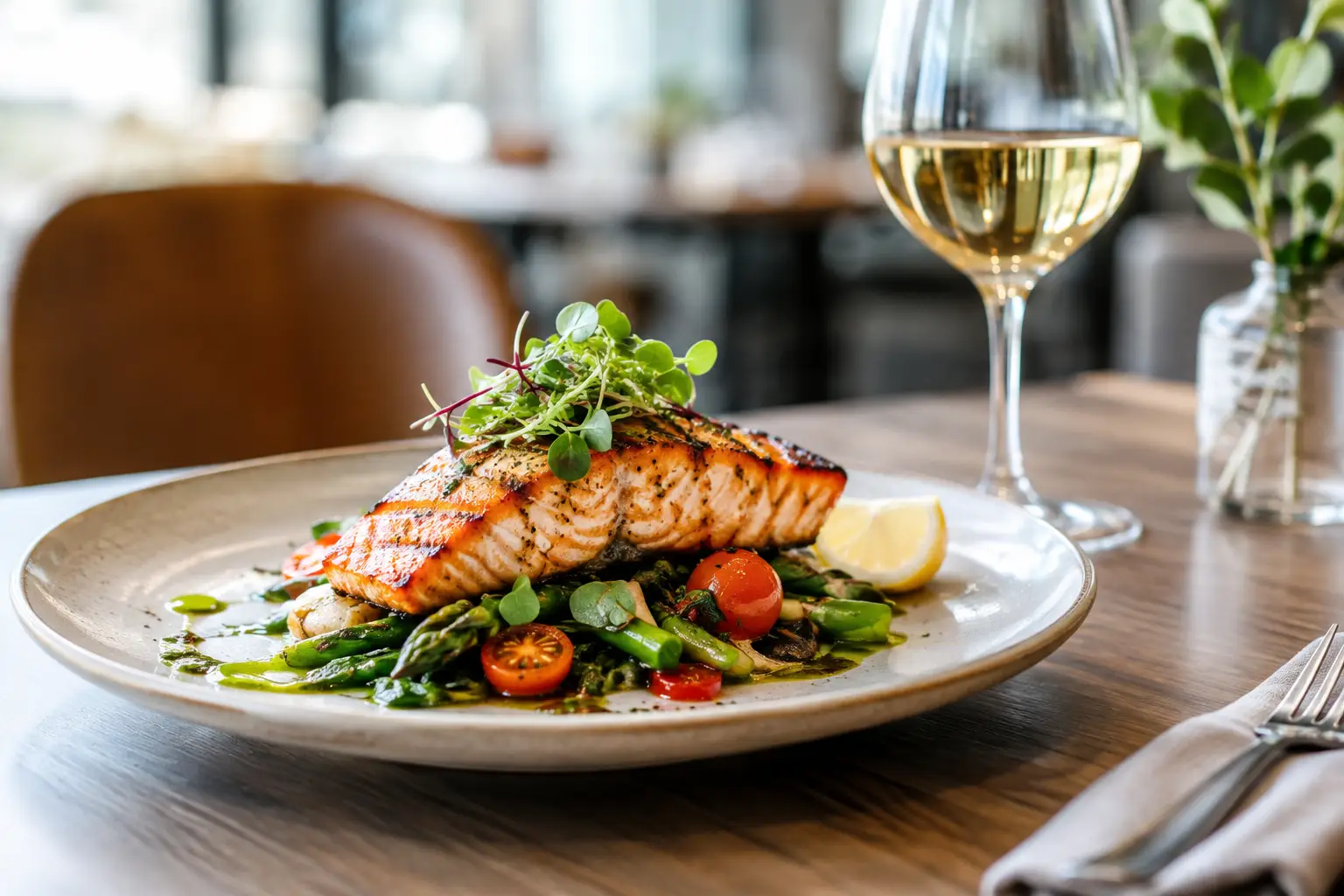
Every restaurant needs a few food images that stop a scroll. A signature-dish hero is not simply a plate photographed from above. It is a carefully composed frame that emphasizes the dish’s most memorable qualities: texture, steam, char, sheen, height, color, or an unexpected garnish.
The right angle depends on the food. Flat dishes such as pizza, salads, and composed brunch plates often read clearly from overhead. Burgers, stacked desserts, cocktails, and dishes with layered height usually benefit from a lower angle. Styling should feel intentional but believable. Guests should recognize the plate when it arrives at their table.
2. Ingredients With a Point of View
Ingredient photography adds credibility when sourcing and craft matter to the brand. Think hands selecting herbs, a close crop of fresh seafood, flour dust on a prep counter, or house-made sauces being finished for service. These images give menu language visual proof.
They work especially well for restaurants that lead with local sourcing, seasonal cooking, scratch kitchens, or cultural specificity. The trade-off is that ingredient shots can become generic if they are disconnected from the food and the people preparing it. Photograph ingredients that genuinely define the menu, not decorative produce chosen only for the camera.
3. The Chef at Work
A chef portrait should say more than, “This person works here.” It can communicate precision, confidence, warmth, and the point of view behind the menu. Photographing the chef plating a dish, tasting a sauce, working the line, or speaking with the team gives the image a natural reason to exist.
Environmental portraits are often more useful than a formal headshot alone because they connect the person to the restaurant’s craft. Still, every brand can benefit from one clean, direct portrait for media kits, interviews, award submissions, and founder storytelling.
4. Hands, Motion, and the Making of a Meal
The most memorable restaurant photography often captures action. A server setting down a plate, a bartender pouring a finish, a cook pulling pasta, or a guest breaking open a warm pastry gives still imagery a sense of movement.
These frames make food feel immediate. They also create versatile assets for social content, menu promotions, and editorial features. Timing matters more than perfection. A slightly imperfect splash or a naturally folded napkin can feel more alive than an overly controlled scene.
5. The Room Before Guests Arrive
Architecture and interior photography establish the setting guests are buying into. Photograph the dining room before service, when tables are set and the space is at its most composed. Capture the bar, distinctive finishes, private dining areas, open kitchens, patio seating, and any design detail that makes the location recognizable.
Wide images should make the space feel inviting, not empty. This is where lighting and composition do significant work. A room can appear cold or overly spacious if it is photographed without warmth, depth, or a focal point. When appropriate, adding a few staff members in natural positions can preserve the design while making the scene feel ready for guests.
6. The Restaurant in Full Energy
A beautifully empty room cannot tell the whole story. Lifestyle images during service show the rhythm and social appeal of the restaurant: friends sharing plates, a date-night toast, a packed bar, a server guiding guests through a menu, or a celebratory table enjoying dessert.
Authenticity is essential. Some restaurants benefit from real guests and candid documentary coverage, while others need a controlled shoot with selected talent, wardrobe, and planned table settings. It depends on the campaign. A launch ad may require more control; an ongoing brand library may benefit from the texture of a genuine service.
7. Cocktails That Carry the Brand
Beverage photography deserves its own plan. Cocktails, wine pours, espresso, and nonalcoholic drinks often generate some of the strongest engagement because they communicate occasion as much as product. A drink can represent a happy hour, a late-night atmosphere, a weekend ritual, or an elevated dinner experience.
Show the glassware, garnish, and liquid clearly, but give the drink context. A moody bar surface may be right for a whiskey-forward concept. Bright daylight and clean styling may better suit a juice bar or brunch restaurant. The visual treatment should align with the restaurant’s personality rather than follow a trend that belongs to another brand.
8. Service That Feels Personal
Hospitality is difficult to explain with words alone. Images of thoughtful service make it visible. A host welcoming guests, a server presenting a dish, a bartender engaging at the bar, or a manager checking in at a table can show the care behind the experience.
These photographs should never feel staged to the point of discomfort. The best moments are often simple and observant. Eye contact, body language, and small gestures communicate more than a broad smile directed at the camera. For restaurants competing on experience, service photography can be as commercially valuable as food photography.
9. Details Guests Remember
Small details often separate a restaurant from its competitors. Photograph the custom menu design, branded packaging, candlelight, tilework, open-fire grill, handmade ceramics, floral arrangement, or a distinctive sign at the entrance. These images are not filler. They build visual recognition and provide useful supporting content between larger hero images.
Detail shots are particularly valuable for websites and social media, where they can create pacing around food and people photography. They should still feel connected to the overall visual direction. If the brand is refined and minimal, the details should be photographed with restraint. If it is expressive and eclectic, the images can carry more color and texture.
10. The Exterior and the Sense of Arrival
Guests need to find the restaurant, and they also need to imagine arriving there. Exterior photography supports maps, local search, media coverage, and event promotion. Photograph the storefront in flattering light, but do not overlook arrival moments: an illuminated sign at dusk, patio activity, the entrance framed by the neighborhood, or a welcoming host at the door.
For destination restaurants, the exterior can establish location and scale. For restaurants in dense urban settings, it may be more about recognizability and atmosphere. Either way, it should accurately represent what guests will see when they arrive.
Plan the Shoot Around Commercial Use
A strong restaurant shoot begins with a shot list, but it should not end there. Before photography begins, identify where images need to work: website banners, reservation platforms, menu features, press materials, digital ads, print, and social channels. Horizontal, vertical, and close-cropped compositions all have different jobs.
Plan food preparation and service around the camera, not the other way around. The kitchen needs enough time to make multiple plates, refresh garnishes, and hold dishes at their visual peak. Front-of-house staff need clarity on when and where they will be photographed. This preparation protects service quality and makes the final images feel effortless.
Avoid trying to photograph every menu item in one session. Prioritize signature dishes, high-margin items, seasonal features, and products that best represent the brand. A smaller collection of exceptional images will outperform a large set of inconsistent ones.
The most effective restaurant photography gives guests a reason to picture themselves there. Start with the food that defines you, then show the people, place, and details that make the experience worth returning for.