

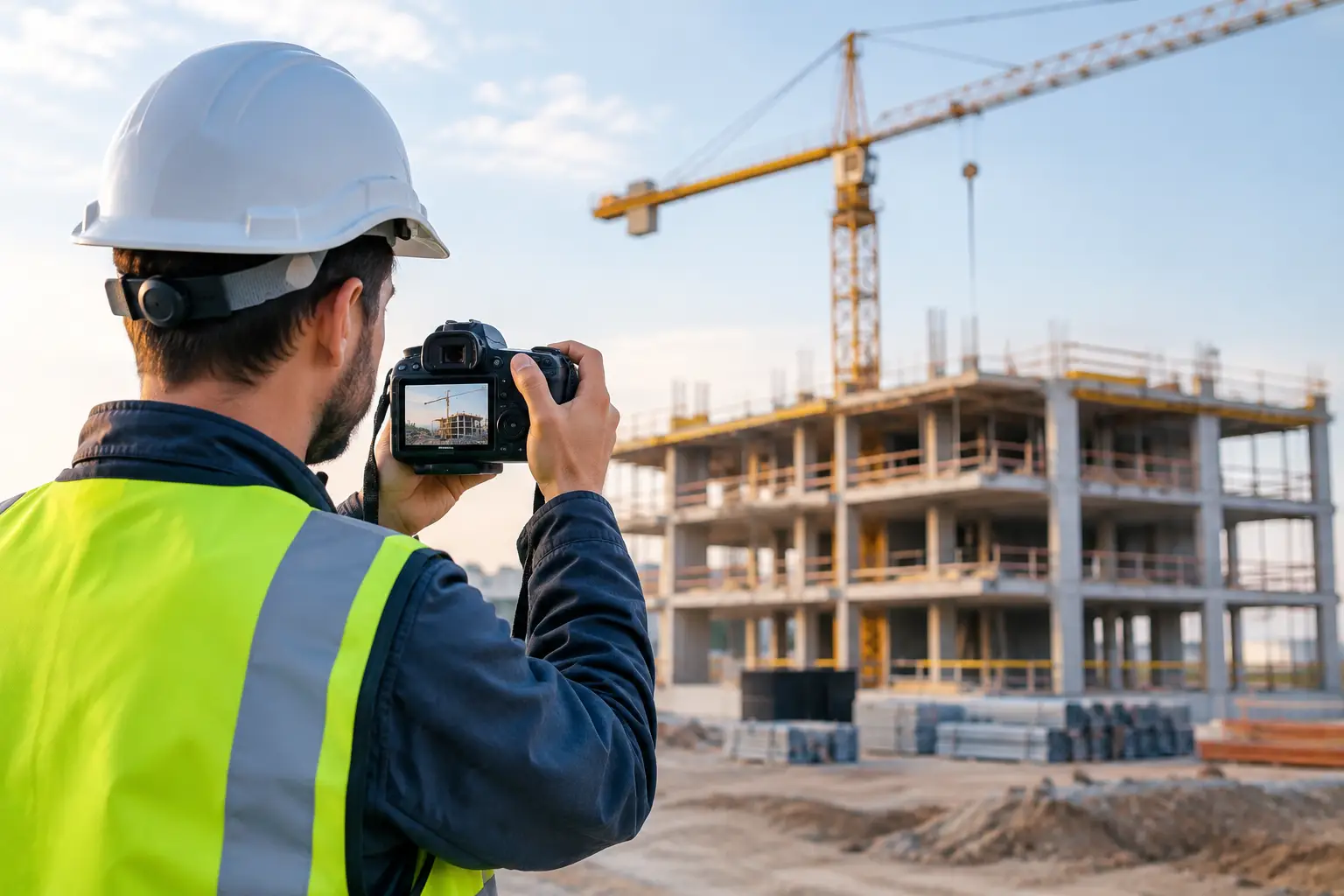
The most valuable construction images are not always the dramatic crane shots or polished final exterior. They are the consistent, well-planned frames that show exactly what changed, when it changed, and who made it happen. A construction progress photography workflow turns recurring site photography into a reliable record for project teams and a library of credible visual assets for marketing, recruiting, investor communications, and future proposals.
For developers, contractors, architects, and industrial operators, progress photography should do more than prove that work occurred. It should communicate scale, craftsmanship, safety culture, coordination, and momentum. That result starts long before the photographer arrives on site.
Start the Construction Progress Photography Workflow Before the First Shoot
A useful workflow begins with alignment, not a camera. The project owner, marketing or communications lead, site superintendent, and photography partner should agree on what the images need to accomplish. A monthly record for internal reporting requires a different approach than a visual campaign built around a landmark development, and most projects benefit from both.
Establish the project story early. Is the emphasis on complex engineering, local economic impact, sustainable building methods, a specialized trade, or the people behind the work? Knowing the answer informs the framing, the priority milestones, and the balance between wide establishing images and detail-driven photographs.
The first planning conversation should also define cadence. Monthly photography works well for many commercial builds, while fast-moving interiors, industrial installations, or major concrete pours may require biweekly or milestone-based visits. There is no universal schedule. The right frequency depends on the construction pace, the number of stakeholders, and how the images will be used.
A clear brief should identify the required deliverables: progress documentation, aerial views, team portraits, editorial imagery, social content, website assets, or a final project case study. When these needs are known at the outset, the photographer can capture intentionally rather than treating each visit as an isolated assignment.
Build a Repeatable Shot Map
Consistency makes progress images genuinely useful. A shot map identifies the key viewpoints that should be repeated at every visit: street-facing elevations, major access points, upper-floor perspectives, mechanical rooms, key work zones, and wide views that establish the site within its surroundings.
The goal is not to make every image identical. Construction is dynamic, and each stage offers new visual opportunities. The repeatable views provide a dependable baseline, while additional images document the activity and details that make that particular visit meaningful.
Whenever possible, record the camera position, lens choice, direction, and approximate time of day for priority viewpoints. A simple reference image with location notes can save considerable time over a long project. It also creates cleaner before-and-after comparisons, which are often among the strongest assets in a completed project portfolio.
A practical shot map typically includes four visual layers:
- Wide images that establish the building, site conditions, and surrounding context.
- Mid-range images that show trades, work areas, equipment, and coordination.
- Detail images that capture materials, workmanship, signage, safety practices, and design features.
- People-focused images that show skilled workers and project leadership in an authentic working environment.
People should not be an afterthought. A job site without people can look technically impressive but emotionally distant. Images of crews solving problems, reviewing plans, operating equipment, or completing precise work bring scale and credibility to the project story.
Coordinate for Safety, Access, and Timing
Construction sites are active workplaces, not photo sets. The best images come from preparation that respects the work underway. Before each visit, confirm site access, required personal protective equipment, check-in procedures, restricted areas, and any activities that cannot be photographed.
The site superintendent remains essential to the process. A short pre-shoot call can reveal important changes: a major delivery, a concrete pour, an inspection, a lift, a site visit from ownership, or a trade completing a visually significant phase. This information helps the photographer arrive at the right moment rather than documenting an empty space immediately before or after meaningful work occurs.
Timing also affects visual quality. Morning and late-afternoon light can add depth to exteriors, while interior construction photography may depend more on practical lighting, available access, and the stage of completion. A photographer needs enough flexibility to work with changing weather and site schedules, especially in regions where conditions can shift quickly.
Aerial photography can add an essential level of context, particularly on large developments, industrial facilities, and multi-building sites. It should be planned around airspace, site safety, weather, and local operating requirements. Aerials are most effective when they complement ground-level coverage rather than replace it. They show scale and progress at a glance; ground images show the craft and people that make progress possible.
Photograph More Than Milestones
Milestone photography is necessary, but it is rarely enough to tell a persuasive story. Steel going up, windows installed, and final finishes completed are easy markers. The images that distinguish one construction project from another often happen between those moments.
Look for the visual evidence of expertise: a precise layout line, a welder at work, carefully organized materials, a foreperson reviewing drawings, specialized machinery in use, or daylight transforming a newly enclosed space. These photographs give communications teams material they can use well beyond the project update.
This is where brand awareness matters. A contractor may want to show disciplined operations and safety leadership. An architect may need images that reveal spatial intent as the structure takes form. A developer may need content that helps tenants, investors, and the broader community understand what is being created. One site visit can serve several audiences when the visual priorities are clear.
It also requires judgment. Not every moment belongs in the final gallery. Clutter, temporary conditions, incomplete work, and sensitive site information may need to be managed through careful framing or excluded altogether. Authenticity matters, but so does presenting the project with professional intention.
Create a Fast, Organized Review Process
Images lose value when they sit in an unorganized folder without dates, labels, or context. A strong construction progress photography workflow includes a predictable review and delivery process after every shoot.
Organize files by project, date, location or phase, and image type. Include enough descriptive metadata that a communications team can locate “east elevation, October,” “mechanical installation,” or “crew portrait” without opening hundreds of files. Consistent naming becomes increasingly valuable as a project moves from months to years.
The delivery set should be edited for clarity and quality, with exposure, color, and composition handled consistently across visits. Construction photography should look polished, but it should not misrepresent the work. Overediting can undermine trust, especially when images are used for documentation, stakeholder updates, or technical communications.
Consider delivering two purposeful collections: a complete progress record for the project team and a tighter selection of high-impact images for marketing use. The full record supports reporting and reference. The curated set gives marketing teams ready-to-use visuals without requiring them to sort through every frame.
Use the Archive While the Project Is Still Active
The strongest construction photography programs do not wait until completion to use their images. A current archive can support proposal presentations, recruitment campaigns, project updates, trade-partner recognition, media outreach, social content, and internal communications throughout the build.
That ongoing use also reveals gaps. If a team repeatedly needs images of a specific trade, a client meeting, a safety initiative, or a certain area of the site, those needs can be added to the next shoot plan. The workflow becomes more valuable over time because it responds to real communication needs rather than following a fixed checklist.
At project close, the archive becomes the foundation for final photography. The earlier progress images provide context for the completed architecture and make before-and-after storytelling far more compelling. They also preserve the work that will disappear behind walls, ceilings, finishes, and landscaping.
A construction site changes too quickly to rely on occasional, unplanned photography. Treat each visit as part of a larger visual record, and the final collection will show more than a building coming together. It will show the care, expertise, and coordinated effort behind the finished result.