
A restaurant can be spotless, busy, and beautifully designed, yet still fall flat in a photograph. The difference is preparation. Knowing how to prepare restaurants for photos means shaping the room, food, team, and service details around the brand experience you want guests to feel before they ever make a reservation.
Commercial restaurant photography is not simply a record of the space. It is an opportunity to show what makes the business worth choosing: the energy of a dining room, the care behind a signature dish, the welcome at the host stand, or the texture of a well-built cocktail. Good preparation gives those moments room to happen naturally while keeping the shoot focused, efficient, and aligned with marketing goals.
Start With the Story You Want the Images to Tell
Before moving tables or polishing glassware, define the role the images need to play. A chef-led fine dining restaurant may need a restrained, editorial feel that highlights craft and detail. A neighborhood brunch spot may benefit from brighter, more social imagery that emphasizes generous plates, natural interaction, and a lively room. A hotel restaurant may need photos that connect dining to a broader hospitality experience.
This decision affects everything from the time of day you shoot to which staff members appear on camera. It also prevents a common problem: creating attractive images that do not feel like the restaurant guests actually visit.
Build a concise shot plan with your photographer and key decision-makers. Include the intended uses for the images, such as a website refresh, paid advertising, social content, press materials, menu boards, or recruitment. A wide dining-room image may work well on a homepage, while vertical images with clear space around a dish are more useful for social posts and promotional graphics.
A practical shot plan should account for four visual priorities:
- Exterior, entrance, signage, and neighborhood context
- Dining room, bar, patio, and architectural details
- Food, drinks, and hands-in-action preparation moments
- Hospitality, including service, chefs, and genuine guest interaction
The list should guide the day, not restrict it. The strongest images often emerge when the team has prepared well enough to recognize an unexpected moment worth capturing.
How to Prepare Restaurants for Photos Before the Crew Arrives
The most effective photo days begin before the photographer walks through the door. Schedule a short walkthrough several days in advance with the general manager, chef or kitchen lead, marketing contact, and photographer. This is where collaboration becomes the key to creativity. It allows each person to identify what matters, what needs to be hidden, and what cannot be interrupted during service.
Start with a deep clean, but do not stop at the obvious surfaces. Photography notices fingerprints on glass, dust on pendant lights, streaks on mirrors, worn menu corners, scuffed chair legs, and clutter behind the bar. These details may not bother a guest in motion, but they can pull attention away from the food and atmosphere in a still image.
Then decide what belongs in the frame. Remove delivery boxes, personal bags, spare furniture, promotional signs that are out of date, and excess tabletop items. Keep the elements that reinforce the brand: distinctive flatware, custom ceramics, linen napkins, candles, fresh flowers, or a well-designed menu. The goal is not to make the restaurant feel empty or overly staged. It is to make every visible object intentional.
Pay particular attention to windows and mixed lighting. Natural light can create warmth and dimension, but harsh midday sun may produce strong shadows across tables or guests’ faces. In restaurants with dramatic interior lighting, the photographer may use supplemental light or choose a different shooting window. The best timing depends on the space, season, and desired mood, so this should be discussed during planning rather than solved on the spot.
Style the Room for Depth, Not Perfection
A restaurant should look ready for guests, not like a showroom. A completely vacant dining room can feel cold, while a room filled to capacity can make it difficult to control backgrounds and service flow. Often, the right approach is to set a portion of the restaurant as though service is about to begin, then add activity selectively.
Set a mix of tables rather than repeating one exact place setting everywhere. Place a few drinks at the bar, fold napkins consistently, and check that chairs are aligned without looking rigid. If tables are very close together, remove one or two settings to give the camera sightlines and create visual breathing room.
Fresh ingredients also matter. Wilted herbs, bruised fruit, melting ice, tired garnishes, and dried sauces are difficult to disguise. Assign someone to maintain the hero areas throughout the shoot, especially the bar and any tables used for food photography.
Prepare Food That Holds Up Under the Camera
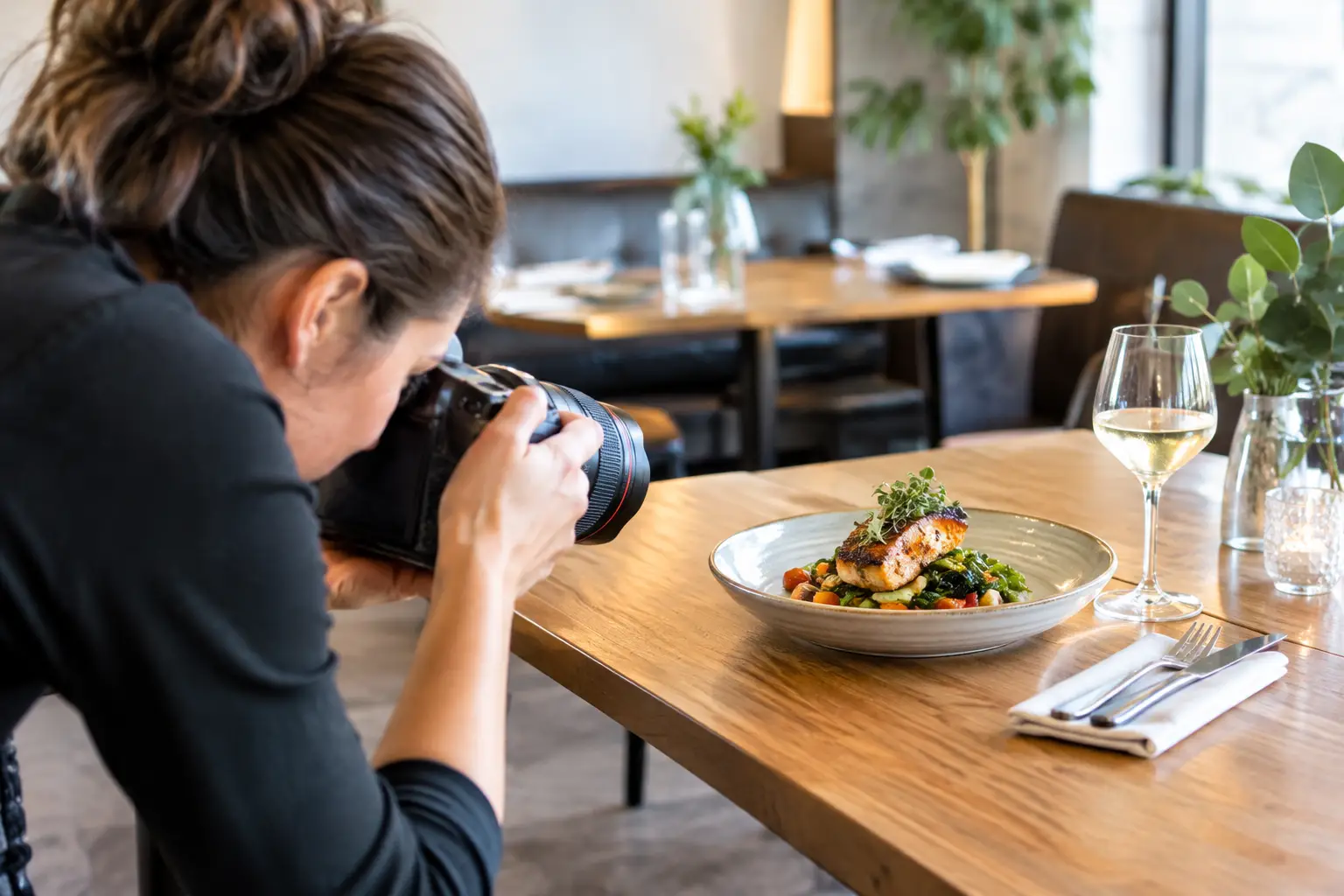
Food photography asks more of a dish than a regular service pass. A plate may need to sit under lights, be moved several times, or be photographed from more than one angle. That does not mean serving inedible food or creating a version guests will never receive. It means preparing each dish at its visual peak and understanding which elements change fastest.
Choose hero dishes that represent the menu and photograph with variety. If every selected plate is beige, low-profile, or heavily sauced, the gallery may lack contrast. Aim for a balanced selection of colors, textures, heights, and formats, while remaining true to the restaurant’s food.
Have the kitchen make at least one backup portion for each priority dish. The first plate may be perfect, but a garnish can shift, a sauce can break, or the camera angle may reveal an issue that was not visible at the pass. Backups protect the schedule and reduce pressure on the culinary team.
The chef or an appointed food lead should be available for final plating adjustments. Small changes make a meaningful difference: turning the best side of a protein toward camera, cleaning a plate rim, adding a final herb, or controlling the height of a garnish. At the same time, avoid over-styling to the point where the dish no longer reflects the guest experience. Credibility is part of appetite appeal.
Drinks require the same attention. Use clean glassware, fresh garnish, consistent ice, and properly prepared rims. For cocktails, have ingredients ready for refreshes. Carbonation fades, condensation changes, and crushed ice melts quickly under warm conditions.
Brief the Team Without Making Them Perform
People give a restaurant its character. A server delivering a dish, a bartender finishing a cocktail, or a cook working the line can communicate confidence and care more effectively than an empty room ever could. But staff should not be asked to become actors.
Brief the team on the purpose of the shoot, the approximate timing, and where the photographer will be working. Ask them to wear clean, current uniforms and avoid items that conflict with the brand, such as visible logos from unrelated companies. Make sure name tags, aprons, and chef coats are intentional and consistent.
For service images, create simple actions rather than stiff poses. A server can place a plate, pour wine, greet a table, or carry a tray through the room. A bartender can stir, shake, garnish, or engage with a guest. The photographer can guide positioning and light, but the interaction should still feel like the hospitality guests receive every day.
If customers will appear in photos, obtain clear consent before shooting. Some restaurants prefer to use invited guests, friends of the brand, or staff stand-ins to maintain control over timing and privacy. This is often more practical than photographing a live rush, particularly when the images are intended for major campaigns or long-term website use.
Protect the Guest Experience and the Schedule
A photo shoot should support operations, not overwhelm them. Many restaurants choose to photograph interiors and food before opening, then capture selected service and lifestyle moments during a controlled portion of business hours. Others close briefly for the shoot if the campaign requires broad access to the space.
There is no single right approach. A quiet pre-service shoot offers control, while a live-service shoot can create genuine energy. The trade-off is that real service introduces variables: guests may sit where you need a clean background, staff may be pulled into operational needs, and food timing becomes less predictable.
Assign one on-site point person who can make decisions quickly. This person should know the shot plan, coordinate staff, confirm what can be moved, and communicate with the photographer. Without this role, small questions can interrupt the flow all day.
Keep a staging area for equipment, backup props, and prepared dishes so they do not crowd the kitchen or appear in the background. Confirm in advance which parts of the restaurant need to remain open and which can be temporarily controlled. A clear plan respects the team while giving the creative work the attention it needs.
Think Beyond the Hero Image
The most valuable restaurant photo library includes more than a few beautiful plates. It should give your marketing team options across seasons, campaigns, platforms, and audiences. Capture horizontal and vertical compositions, close details and wider scenes, images with people and images with open space for text.
Also consider what makes the restaurant distinct beyond the menu. It may be a chef’s hands finishing a dish, a distinctive tile wall, an open-fire grill, a welcoming bar team, or the first moment guests see when they enter. These details build a visual brand system rather than a collection of disconnected images.
When the room is prepared with intention, the food is ready at its best, and the team understands the story they are helping tell, photography becomes more than documentation. It becomes a clear invitation for the right guest to walk through the door.