
A staff headshot day can go sideways fast. One person arrives in a neon golf shirt, another forgot the calendar invite, and someone asks if their vacation selfie can be used instead. If you want images that feel polished, credible, and aligned with your brand, preparation does most of the heavy lifting.
Knowing how to prepare staff headshots is less about giving employees a long list of rules and more about creating a clear, efficient process. The strongest results come from planning for consistency while still leaving room for personality. That balance matters because headshots are not just profile photos. They are brand assets that shape first impressions across websites, proposals, media features, recruiting materials, and sales outreach.
Why staff headshot prep matters
A well-produced headshot signals competence before anyone reads a word of copy. For professional services firms, corporate teams, industrial companies, and hospitality brands, that first visual impression affects trust. If the photos feel mismatched, dated, or casual in the wrong way, the brand can feel the same.
Preparation also protects the investment. When wardrobe is inconsistent, schedules are rushed, or staff are unclear on what to expect, the session takes longer and the final gallery loses cohesion. On the other hand, when people arrive prepared, the photography process moves quickly and the images feel intentional.
That is especially true when the photos will live together on a team page or in a pitch deck. A great individual portrait is useful. A unified set of portraits is far more valuable.
How to prepare staff headshots before photo day
The first step is deciding what the images need to do for the business. A law firm, a construction company, and a restaurant group should not all approach headshots the same way. Some brands need clean, formal portraits on a neutral background. Others benefit from environmental portraits that show people in the workplace. The right choice depends on how the images will be used and what kind of impression the brand wants to create.
Once that is clear, define a visual standard. This includes background style, lighting approach, crop, retouching level, and overall tone. If one department is photographed in a bright lifestyle style and another in a formal studio setup, the inconsistency can weaken the brand presentation. There are exceptions, but they should be strategic.
Communication comes next. Staff should receive a short prep note well before the session. Keep it clear and practical. Tell them what to wear, where to arrive, how long the session will take, and what the desired tone is. People perform better on camera when they know what is expected.
If the team is large, assign one internal point person to manage timing and questions. That saves friction on the day of the shoot and keeps the process efficient.
Start with brand alignment
Before anyone picks a shirt, decide what the headshots should say about the company. Are you aiming for polished and corporate, approachable and modern, or confident and creative? That decision influences everything from wardrobe to expression to location.
This is where many organizations miss the mark. They focus on getting everyone photographed, but not on whether the portraits reflect the brand story. A financial firm may want clean lines, muted tones, and a refined look. A design agency may want a little more personality and relaxed styling. Neither approach is automatically better. What matters is fit.
Give staff simple wardrobe direction
Wardrobe guidance should be specific enough to create consistency but not so rigid that people feel uncomfortable. In most cases, solid colors work better than busy patterns. Mid-tone and darker shades usually photograph well, while very bright colors can pull attention away from the face.
Fit matters as much as color. Clothing should look tailored and comfortable when standing and seated. Wrinkled fabric, oversized jackets, and shirts that pull at the buttons all show up on camera. If the team wears branded apparel in daily operations, it may make sense to include it, but only if the garments are clean, well-fitted, and visually consistent.
It also helps to think in groups. If the entire leadership team will appear together on a website, ask them to stay within a coordinated range rather than dressing identically. The goal is cohesion, not uniformity.
Plan grooming and finishing details
Small details become obvious in a professional portrait. Encourage staff to arrive camera-ready, with hair styled as they would normally wear it in a client-facing setting. Glasses should be clean. Facial hair should be neatly trimmed if that reflects the person’s usual appearance. Makeup, if worn, should be natural and reduce unwanted shine rather than feel overly styled.
This is not about making people look different. It is about helping them look like their best professional selves. When prep is framed that way, staff are usually far more comfortable.
Make photo day easy for your team
A headshot session should feel organized, not stressful. Build a realistic schedule with a bit of buffer time. If employees are being pulled out of meetings with no transition, it shows in the expressions. Even five minutes to regroup can improve the result.
Choose a location that suits the visual plan and the workday. On-site photography is often the most efficient option for businesses, especially when the team is large or operations cannot pause for long. A studio setup can deliver tighter control. An office or workplace setting can feel more authentic. Again, it depends on the brand and how the images will be used.
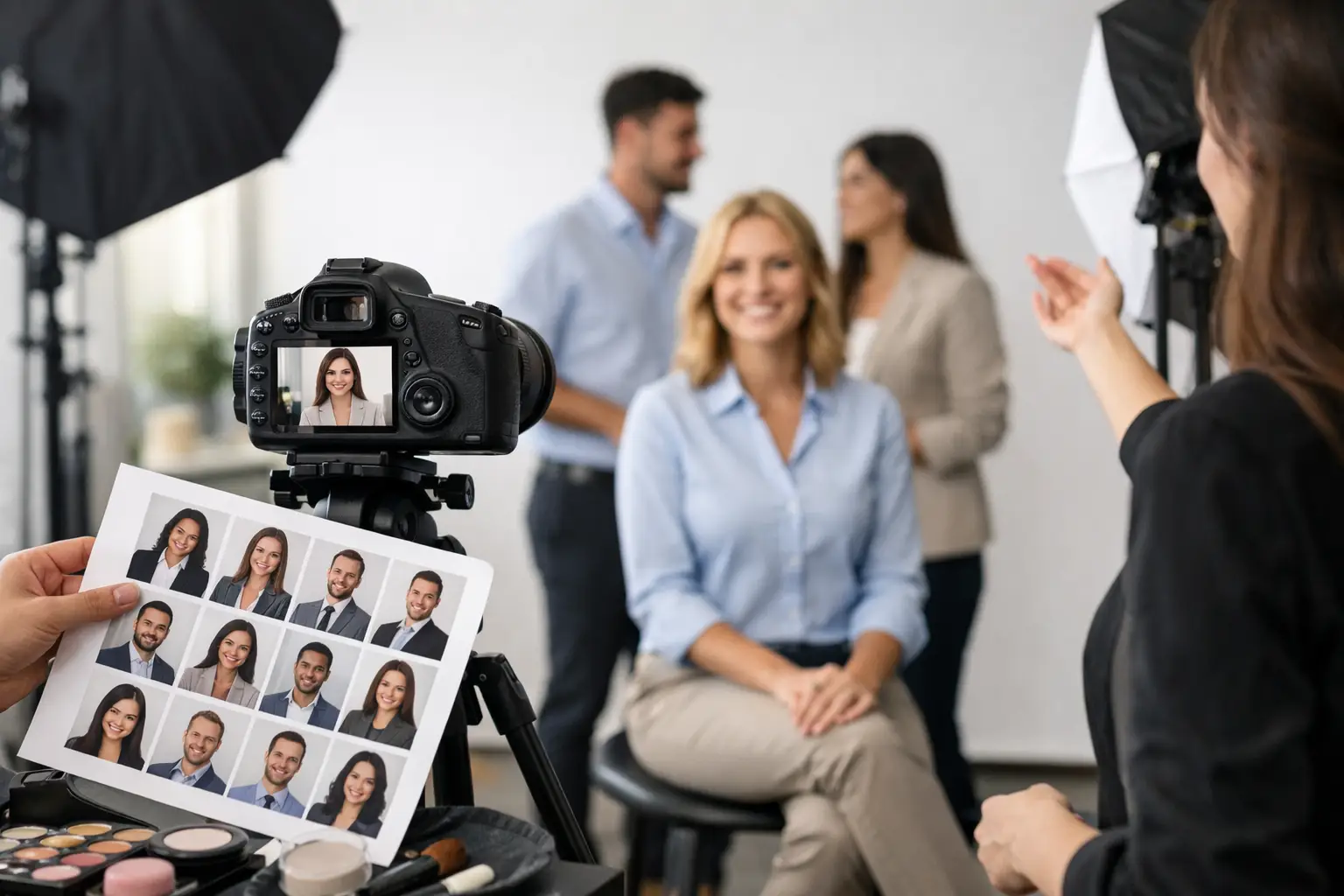
Have a mirror, lint roller, tissues, and basic touch-up supplies available. These small practical details keep the pace moving and help staff feel looked after. A collaborative photography team will also direct posing and expression so employees do not feel they are left to guess.
Help people feel comfortable on camera
Most employees are not professional models, and they do not need to be. The right direction makes a significant difference. A good photographer will coach posture, hand position, chin angle, and eye line in a way that feels natural.
What helps most is setting expectations in advance. Let staff know they do not need to practice a perfect smile or arrive with a scripted pose. They simply need to show up prepared and open to direction. The strongest portraits usually come from small adjustments, not dramatic performance.
If someone is visibly nervous, move quickly and keep the feedback simple. Over-directing can make people stiff. A calm process creates better expressions than a complicated one.
Common mistakes when preparing staff headshots
The most common mistake is treating headshots as an afterthought. When planning starts too late, organizations end up with inconsistent clothing, missing staff, and rushed decisions about background or style.
Another issue is trying to make everyone look exactly the same. Consistency matters, but people should still look like themselves. If every image feels overly controlled, the team can appear less approachable. The best corporate portrait programs protect brand consistency without flattening personality.
Outdated images are another problem. If some headshots are three years old and others were taken last week, the team page starts to feel disjointed. It is worth creating a plan for new hires and periodic refreshes so the visual identity stays current.
There is also the question of retouching. Light retouching can polish distractions and create a refined result. Too much retouching can make people look artificial, which undermines trust. For most businesses, the right approach is subtle and professional.
How to prepare staff headshots for long-term use
A headshot session should solve more than one immediate need. Think beyond the website bio page. Staff portraits are often used in proposals, conference materials, press kits, email signatures, recruiting campaigns, LinkedIn profiles, and internal communications. That broader use should shape the way the images are captured and delivered.
It is smart to create a repeatable system. That means documenting the visual style, keeping wardrobe guidance on file, and working from a consistent production process when new employees need portraits. This is where an experienced commercial photography partner brings real value. The goal is not just a good shoot once, but a headshot program that stays aligned as the business grows.
For companies that care about brand presentation, preparation is what separates a basic photo day from a strategic visual asset. When the process is clear, the team feels confident, the imagery looks cohesive, and the final portraits support the way the business wants to be seen. At Image Calgary, that is where the real work starts – understanding your brand story well enough to make every face in the frame strengthen it.
The best staff headshots do not feel generic or overproduced. They feel credible, current, and unmistakably connected to the business behind them.